Best Sunglasses for Pilots in 2026 — What Aviators Actually Need
If you’ve ever reached for your favorite pair of polarized shades mid-flight and watched your Garmin G1000 (or any MFD) go dark, you already know the problem. Standard polarized lenses and glass cockpit displays don’t mix — and that’s just the beginning of what separates real pilot eyewear from everything else on the market.
This guide breaks down exactly what to look for in aviation sunglasses, then shows the options that actually meet the requirements without forcing you to choose between glare protection and readable screens.
What Makes Pilot Sunglasses Different
Flying introduces a unique set of visual demands that no regular pair of sunglasses is designed to handle:
- MFD and LCD screen compatibility — Traditional polarized lenses black out or distort Multi-Function Displays (MFDs), GPS screens, and any LCD instrument. In a glass cockpit, that’s a serious safety issue.
- Sustained glare at altitude — UV intensity increases roughly 5% for every 1,000 feet of altitude. At cruise, your eyes are taking a beating that ground-level sunglasses aren’t rated for.
- All-day comfort — Flights aren’t 20-minute drives. Your eyewear needs to stay comfortable, stable, and clear for hours at a stretch.
- Impact resistance — In turbulence, debris, or an emergency, your lenses need to protect your eyes, not shatter into them.
If your sunglasses can’t check all four of those boxes, they don’t belong in the cockpit.
What to Look for in the Best Pilot Sunglasses
1. MFD-Compatible Polarization This is non-negotiable for modern glass cockpit flying. Standard polarized lenses filter light at a fixed angle — the same angle used by LCD screens — causing blackout or rainbow distortion on your instruments. MFD-compatible (or Pilot Polarized) lenses are engineered to cut glare without interfering with digital displays. If a pair doesn’t specifically advertise screen compatibility, assume it will cause problems.
2. UV400 Protection UV400 means the lenses block 100% of UVA and UVB radiation up to 400 nanometers. At altitude this isn’t optional — it’s the baseline. Long-term UV exposure is linked to cataracts, macular degeneration, and photokeratitis.
3. Impact-Resistant Lenses and Frame Look for ANSI Z80.3 (or higher) impact rating. These lenses have been tested against the FDA-mandated steel-ball drop. Pair that with a Grilamid TR90 frame — lightweight, flexible, and extremely tough — and you have eyewear that can take a hit.
4. Anti-Slip Fit Sunglasses that shift during turbulence or high-G maneuvers are a distraction. Anti-slip nose pads and temple grips keep everything locked in place.
5. Scratch and Smudge Resistance Cockpit environments are hard on lenses. Hydrophobic and oleophobic coatings repel oils, water, and fingerprints and make cleaning faster and safer. Scratched lenses scatter light and reduce clarity — exactly what you don’t want when scanning for traffic.
The Best Pilot Sunglasses in 2026
Signature Series — Everyday Performance
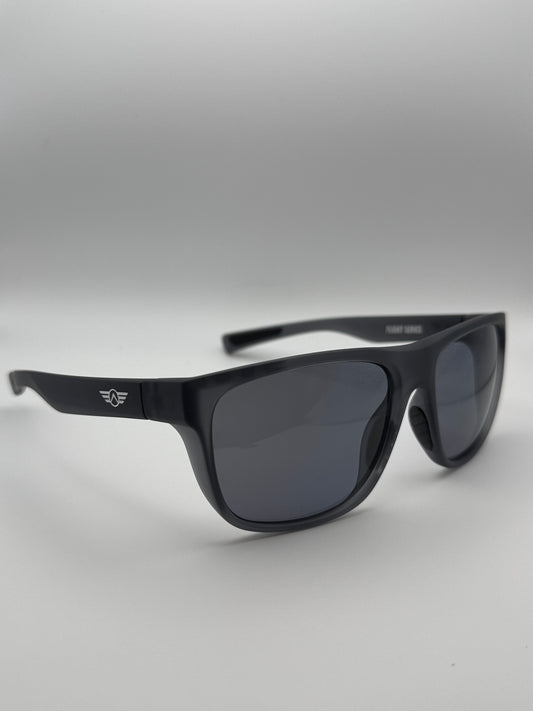
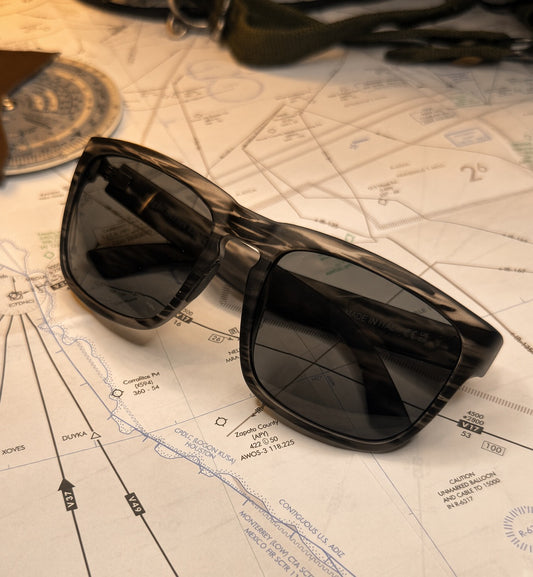
Flight Series Maverick – Polarized MFD Sunglasses — $59 The Maverick is built for pilots who want high performance in a clean, everyday frame. Semi-translucent smoky gray Grilamid TR90 frame, full MFD-compatible polarized lenses, UV400, scratch/smudge resistance, and anti-slip grips. Best for: Pilots who fly regularly and want a versatile frame that works in the cockpit and beyond. → Shop the Maverick
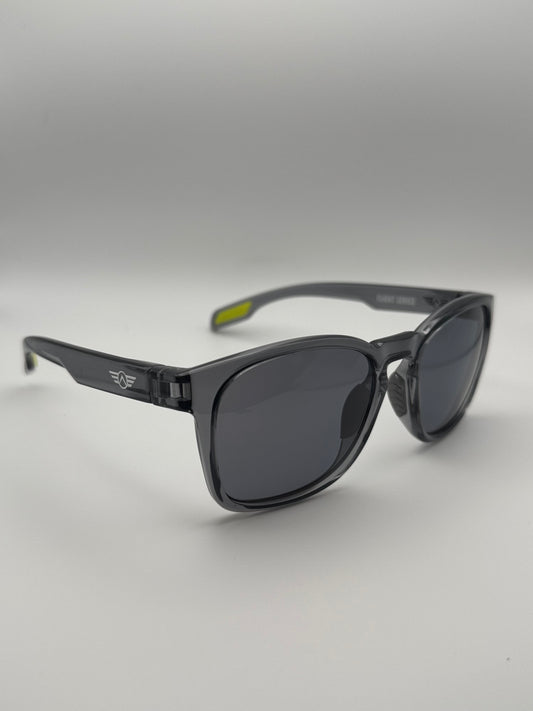
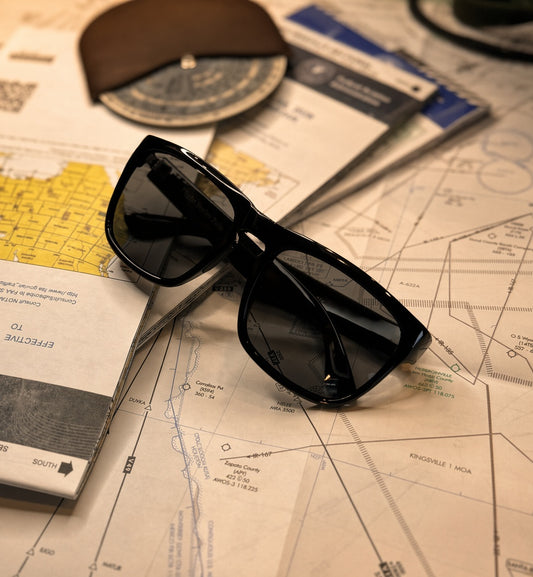
Flight Series Ghost – Polarized MFD Sunglasses — $59 The Ghost strips away everything unnecessary and focuses on clear vision, all-day comfort, and polarized performance that works wherever you fly. Low-profile design with the same core optics as the Maverick. Best for: Pilots who prefer a minimal, streamlined look with zero compromise on performance. → Shop the Ghost
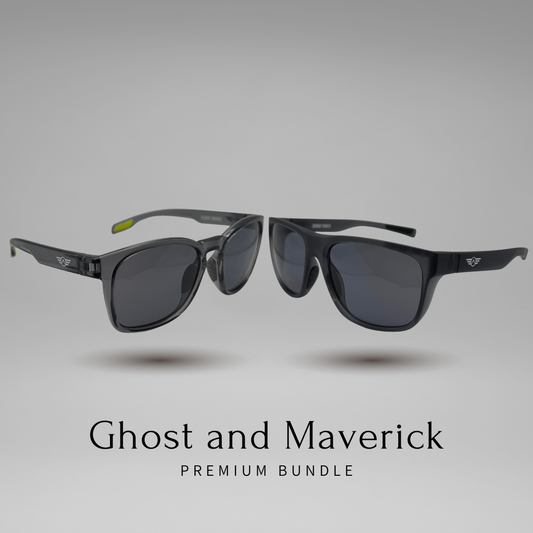
Pilot’s Pair — Maverick + Ghost Bundle — $89 Two distinct styles, one shared standard of MFD-compatible polarized performance. Save versus buying separately and get both a dedicated cockpit pair and an everyday pair. Includes microfiber bags, cloths, and a few surprise patches. Best for: Anyone who wants the best value in pilot eyewear right now. → Get the Pilot’s Pair
Flight Line Series — ANSI Z80.3 Impact Rated
These models take the same Pilot Polarized optics and step up the mechanical protection with full ANSI Z80.3 impact rating (the FDA-mandated steel-ball test). Same UV400, same scratch/smudge resistance, same TR90 frames — just more impact toughness for pilots who want certified protection.
Zulu – ANSI Z80.3 Polarized — $89 Clean, purpose-built design with full impact rating. → Shop the Zulu
Ember – ANSI Z80.3 Polarized — $89 Same core performance and impact rating in a slightly different aesthetic. → Shop the Ember
Alpha – ANSI Z80.3 Polarized — $89 Another strong option in the impact-rated lineup for pilots who want extra mechanical protection. → Shop the Alpha
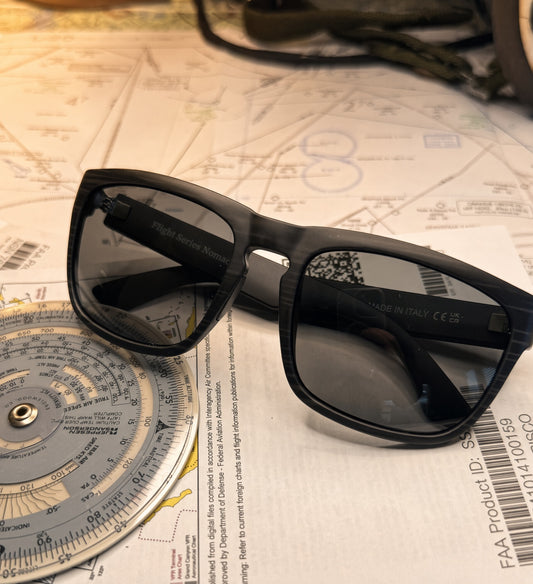
Nomad – ANSI Z80.3 Polarized — $89 Completes the Flight Line series with the same MFD-compatible polarization and ANSI Z80.3 rating. → Shop the Nomad
Quick Comparison
| Model | Price | MFD Compatible | UV400 | ANSI Z80.3 | Best For |
|---|---|---|---|---|---|
| Maverick | $59 | Yes | Yes | — | Everyday versatility |
| Ghost | $59 | Yes | Yes | — | Minimal aesthetic |
| Pilot’s Pair | $89 | Yes | Yes | — | Best overall value |
| Zulu / Ember / Alpha / Nomad | $89 | Yes | Yes | Yes | Certified impact protection |
Frequently Asked Questions
Can I wear polarized sunglasses in the cockpit? Standard polarized sunglasses can black out or distort LCD and MFD displays. MFD-compatible polarized sunglasses (like every pair in the Flight Series lineup) are specifically engineered to cut glare without interfering with digital instruments.
What ANSI rating should pilot sunglasses have? ANSI Z80.3 is a solid baseline for aviation use. It certifies the lenses against the FDA-mandated impact test. The entire Flight Line series (Zulu, Ember, Alpha, Nomad) carries this rating.
Do darker lenses mean better UV protection? No. Lens darkness and UV protection are independent. Always look for UV400 certification, not just tint.
Are these good for everyday use too? Yes. The same MFD-compatible polarization that works in the cockpit also works on the road, on the water, and anywhere glare is a problem.
The Bottom Line
The best sunglasses for pilots aren’t just about looking sharp on the ramp — they’re about protecting your vision, maintaining situational awareness, and performing reliably every time you strap in. MFD compatibility, UV400 protection, impact resistance, and a secure fit aren’t nice-to-haves. They’re the baseline.
The Maverick and Ghost deliver that performance at $59. The Pilot’s Pair is the best value if you want both. And if you want the added ANSI Z80.3 impact rating, the Zulu, Ember, Alpha, and Nomad are all $89.
Built by active-duty Naval Aviators who fly with these exact demands every day. Priced so you can actually use them. Engineered so the screens stay visible.