Best Aviation Sunglasses for Men in 2026: What Actually Works in the Cockpit
There’s a reason pilots are picky about sunglasses. At altitude the UV load is higher, glare off clouds and water is brutal, and the last thing you need is a pair that turns your multi-function displays into a dark mess the moment you turn your head.
For years the conventional wisdom has been simple: buy non-polarized mineral-glass aviators, preferably something with military heritage, and pay accordingly. That advice still shows up in most 2026 roundups. It’s not wrong—it’s just incomplete.
The real conversation in 2026 is about whether you can finally have polarization that works with modern glass cockpits instead of fighting them. Most expensive pairs still make you pick one or the other. A few newer options don’t.
What Actually Matters in Aviation Sunglasses
Before ranking anything, the requirements are straightforward:
- Full UV400 protection (non-negotiable at altitude)
- Optical clarity with minimal distortion
- Frames that sit comfortably under a headset
- Impact resistance that meets real standards
- And, for anyone flying glass, lenses that do not black out or wash out MFDs and LCDs
Traditional polarization fails the last test. The filter that kills glare off water and pavement also fights the polarizing layers already built into digital displays. Head angle changes and the screen goes dark or rainbowed. That’s why so many pilot guides still say “just go non-polarized.”
The better solution is tempered or calibrated polarization—strong enough to cut real-world glare, dialed so digital screens stay readable. That’s the gap most heritage brands never closed.
The Usual Contenders in 2026
Randolph Engineering Aviator remains the gold standard for many. Military-spec build, bayonet temples that slide under headsets, excellent mineral glass, 100 % UV. Prices typically run $280–$305 depending on finish and size. They are outstanding non-polarized sunglasses. They are also three to five times the price of purpose-built alternatives and give you zero polarization benefit when you’re outside the cockpit or dealing with water/road glare.
Serengeti models (Velocity, Carrara, various pilots) sit in the $200–$400 range. Photochromic glass is useful for changing light, and some polarized versions exist. The polarized ones still carry the classic cockpit-screen risk, and the non-polarized ones leave glare on the table. Build quality is high; value relative to performance is not.
American Optical Original Pilot and various Ray-Ban Aviator Classics land between $65 and $180. Solid heritage, decent UV protection, classic looks. Again, almost always non-polarized if they’re cockpit-safe, and the cheaper versions trade durability and optical consistency for price.
Flying Eyes, Scheyden, Method Seven, and similar specialist brands focus on headset fit or premium optics and usually sit $180–$350+. Many are excellent for comfort under headsets. Most still force the polarized-versus-screen tradeoff.
These are all legitimate products. None of them were designed by active-duty aviators who got tired of gear that failed in the actual environment they fly in.
The Practical 2026 Choice for Most Men
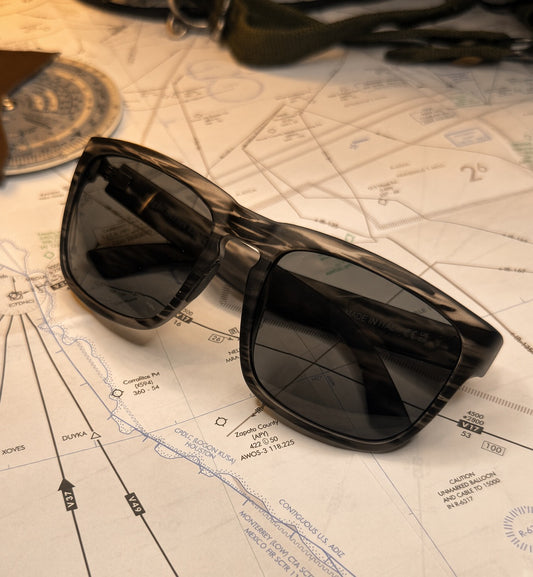
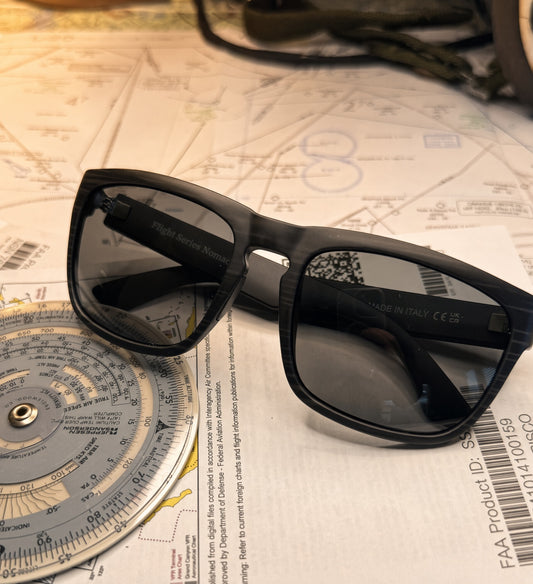
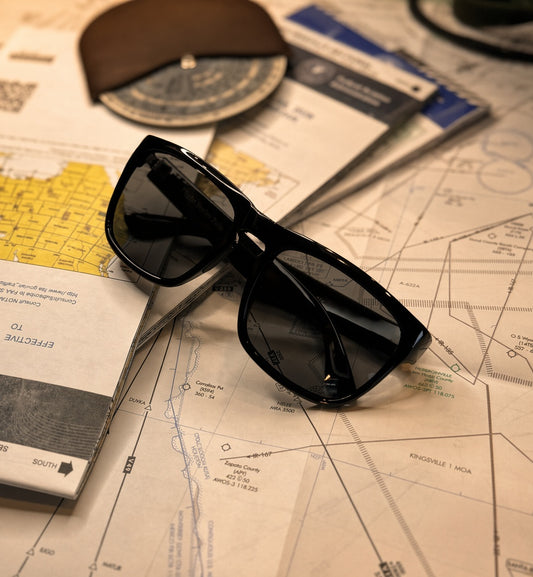
Flight Series Eyewear was built by a Marine Corps MV-22 pilot and a P-8 Poseidon pilot/flight instructor who lived the exact frustration of sunglasses that either failed quickly or blacked out their screens. The result is Pilot Polarized lenses—tempered polarization that reduces glare while remaining mostly compatible with MFDs and digital cockpit displays.
You get:
- UV400 protection
- ANSI Z80.3 impact resistance (the FDA-mandated steel-ball drop test)
- Scratch- and smudge-resistant coatings with oleophobic treatment
- Lightweight TR90 frames
- Free U.S. shipping
And you get it at prices that make the heritage brands look overbuilt for the job.
The current lineup:
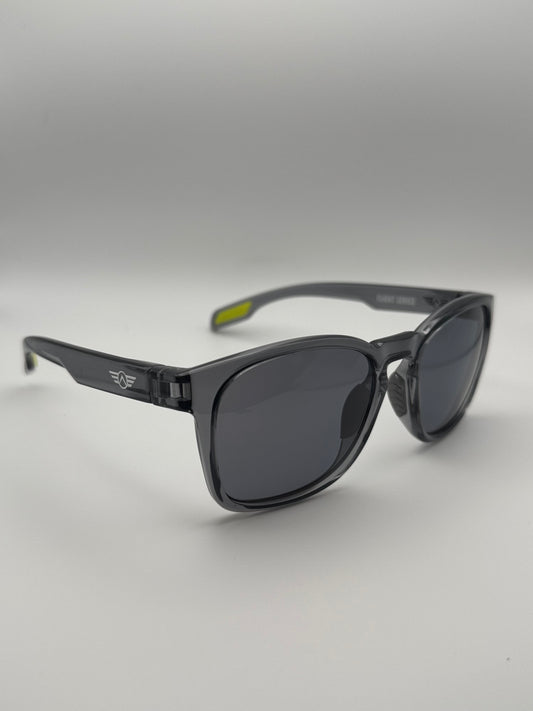
- Ghost – Polarized MFD Sunglasses — $59
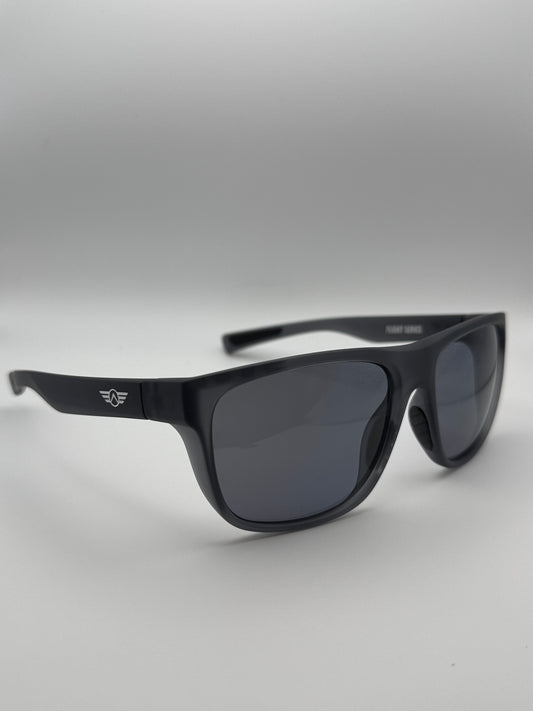
- Maverick – Polarized MFD Sunglasses — $59
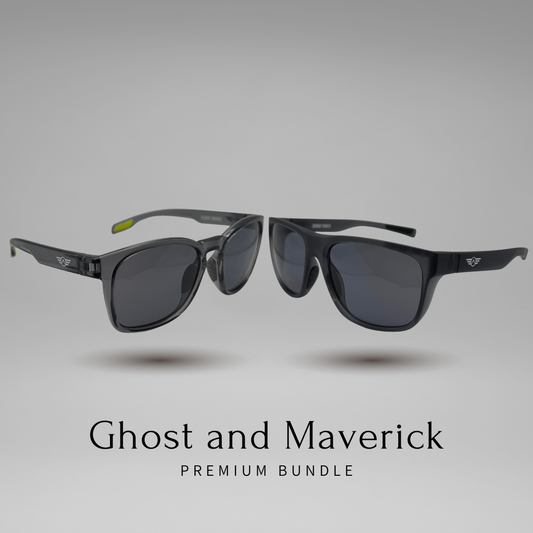
- Pilot’s Pair — Maverick + Ghost Bundle — $89
- Zulu – ANSI Z80.3 Polarized — $89
- Ember – ANSI Z80.3 Polarized — $89
- Alpha – ANSI Z80.3 Polarized — $89
- Nomad – ANSI Z80.3 Polarized — $89
The Signature series (Ghost and Maverick) gives you the core Pilot Polarized performance at a price most pilots can treat as everyday gear rather than a precious item. The ANSI Z80.3 series adds the higher impact rating for anyone who wants extra mechanical toughness—still well under the cost of a single Randolph or Serengeti pair.
Why the Value Gap Matters
A pair of Randolph Aviators will last a long time if you treat them carefully. So will a Flight Series pair—and you can own two or three different styles, or a backup pair, for less than one premium set. When a pair lives in a flight suit pocket, gets tossed in a bag, or sees real field use, the ability to replace or rotate without guilt is a feature, not a compromise.
The functional difference is clearer. Most expensive aviation sunglasses still require you to accept either reduced glare control or potential screen issues. Flight Series was engineered specifically to reduce that tradeoff. The polarization is there when you need it on the ramp, on the water, or driving to the airport. The displays stay readable when you’re in the seat.
That combination—real glare reduction, MFD compatibility, impact rating, and pricing that doesn’t require a second thought—is rare in 2026.
Who These Are Actually For
Active military and civilian pilots who fly glass cockpits. Veterans who still want gear that performs. Aviation enthusiasts who spend time around aircraft and water. Anyone who has bought the classic expensive pair, used it for a season, and then reached for something cheaper because they didn’t want to risk the “good” ones.
Men who simply want sunglasses that look right with a flight jacket or a weekend truck and still work when the mission starts.
Bottom Line for 2026
The best aviation sunglasses for men this year are not the ones with the longest military procurement history or the highest price tag. They are the ones that solve the actual problems pilots face today: high UV, real glare, digital displays that cannot be compromised, and the need for durable gear that doesn’t cost a week’s per diem.
Flight Series hits that list without the usual compromises. The Ghost and Maverick cover most needs at $59. The bundle makes the math even better. The Zulu, Ember, Alpha, and Nomad step up the impact rating at $89.
Built by people who fly the aircraft, priced so you can actually use them, and engineered so the screens stay visible. That is what “best” looks like in 2026.