Best Aviation Sunglasses for Men in 2026: Why Most Name Brands Fall Short
This guide cuts through the noise. It lays out what actually matters for aviation sunglasses in 2026, shows where the big name brands still fall short, and points to the options that solve the real issues without the $300 price tag.
What Aviation Sunglasses Actually Need to Do
Flying puts unique demands on eyewear that beach or driving sunglasses were never designed to handle:
- MFD and digital screen compatibility — Traditional polarization fights the polarizing filters already built into LCD and MFD screens. The result is blackout, washout, or rainbow distortion at certain head angles. In a glass cockpit that is a safety issue, not a minor inconvenience.
- Higher UV load at altitude — UV intensity rises roughly 5% per 1,000 feet. At typical cruise altitudes your eyes are taking significantly more radiation than they do on the ground. UV400 protection is the baseline, not a luxury.
- Hours of continuous wear — A flight is not a short drive. Frames need to stay comfortable and stable under a headset for long periods without hot spots or constant adjustment.
- Real impact resistance — Turbulence, debris, or an unexpected event can turn ordinary lenses into a hazard. Lenses that meet ANSI Z80.3 (including the FDA steel-ball drop test) give meaningful protection.
Any pair that fails even one of these is the wrong tool for the job.
Where Typical Name Brand Sunglasses Fall Short
The most recommended “aviation” sunglasses for men in 2026 still follow a familiar pattern:
- Randolph Engineering Aviators — Excellent military-heritage build, solid mineral glass, bayonet temples that work under headsets. Prices usually sit between $280 and $305. They are outstanding non-polarized sunglasses. They offer zero polarization benefit when you need glare reduction outside the cockpit, and the cost puts them in “treat carefully” territory for many pilots.
- Serengeti models — Often $200–$400. Photochromic glass is useful in changing light, and some polarized versions exist. The polarized ones still carry the classic risk of screen interference. The non-polarized ones leave glare on the table.
- Ray-Ban Aviator Classics and similar — Iconic look, decent UV protection, prices typically $150–$200. Most cockpit-safe versions are non-polarized. Polarized versions create the same display problems as any other standard polarized lens.
- Other specialist brands (Flying Eyes, Scheyden, Method Seven, etc.) — Strong on headset fit or premium optics, usually $180–$350+. Most still force the same polarized-versus-screen tradeoff.
These are legitimate products. Many of them are well made. What they share is that none were engineered from the start to deliver real glare reduction and readable MFDs at the same time. You either give up polarization or accept the risk of display issues. At those prices, that compromise is hard to justify.
A Better Approach: Purpose-Built for the Cockpit
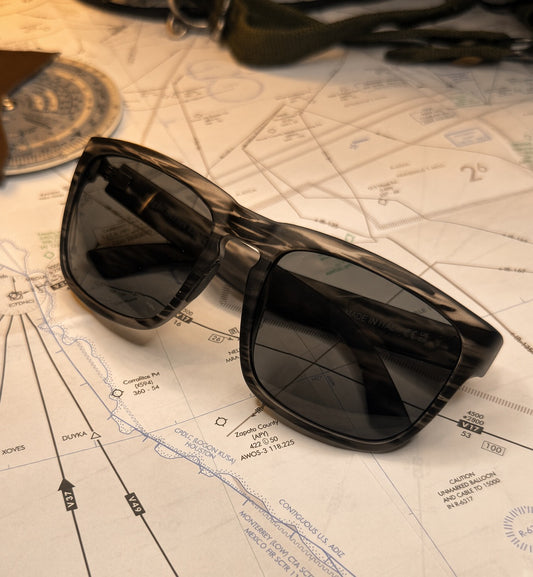
Flight Series Eyewear was created by active-duty Naval Aviators who got tired of the exact problems described above. The solution is Pilot Polarized lenses — tempered polarization that cuts glare from the sun, water, and reflections while remaining mostly compatible with MFDs and digital cockpit displays.
You get the glare control pilots actually want without the blackout risk that comes with ordinary polarized sunglasses. Add full UV400 protection, scratch- and smudge-resistant coatings, lightweight TR90 frames, and free shipping in the United States, and the value equation changes.
Here is the current lineup with clear pricing and features:
Classic Series — Core Performance at Everyday Prices
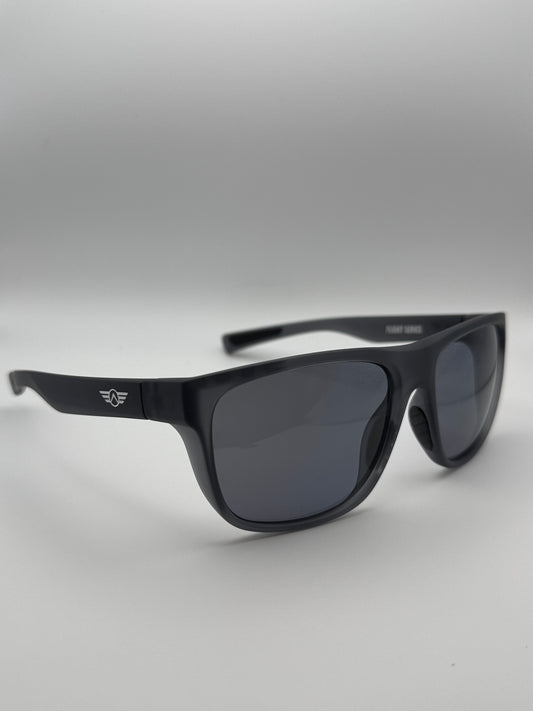
Maverick – Polarized MFD Sunglasses — $59 Semi-translucent smoky gray TR90 frame. Full Pilot Polarized lenses that work with MFDs and digital screens. UV400. Scratch and smudge resistance. Anti-slip nose and temple grips. Best for: Pilots who want a versatile, everyday frame that performs in the cockpit and outside it. → Get the Maverick
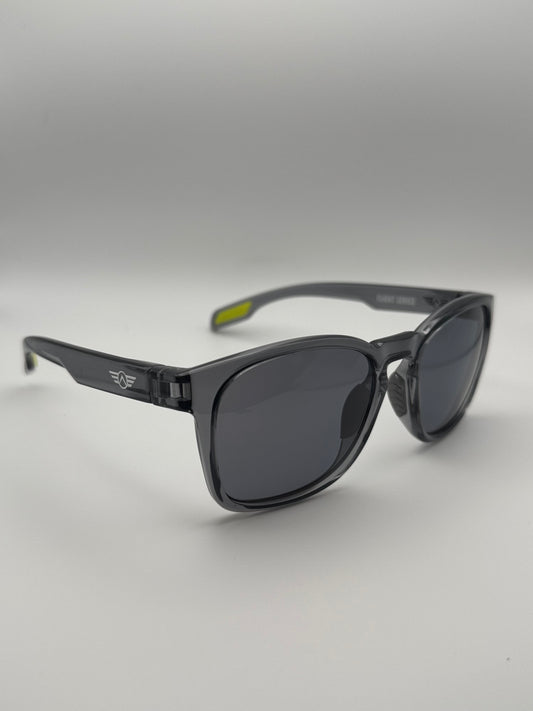
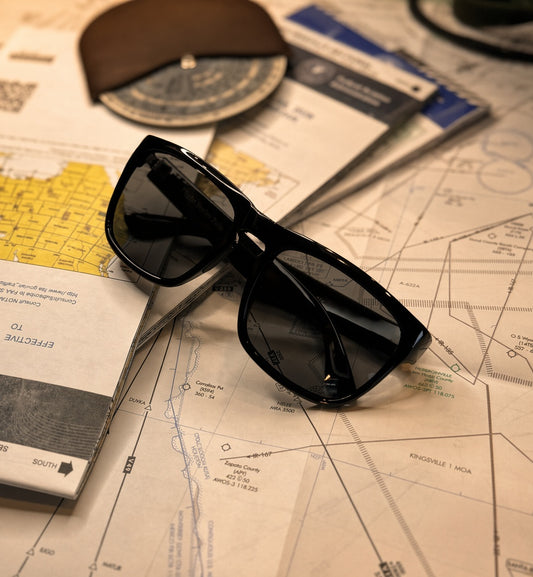
Ghost – Polarized MFD Sunglasses — $59 Lower-profile, cleaner aesthetic with the same Pilot Polarized optics, UV400, coatings, and TR90 construction. Best for: Pilots who prefer a minimal look without giving up any performance. → Get the Ghost
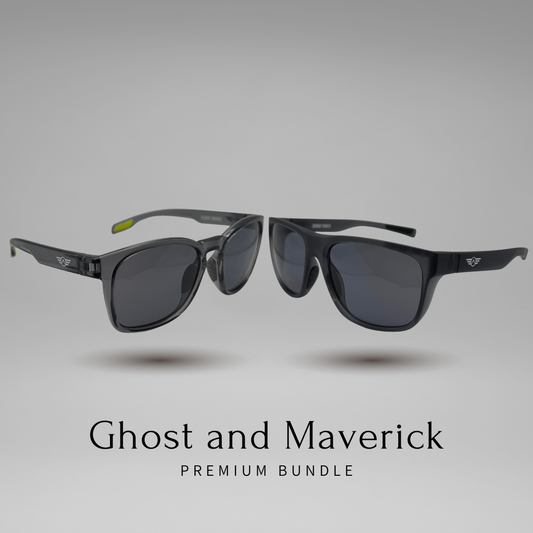
Pilot’s Pair — Maverick + Ghost Bundle — $89 Both styles, same performance standard. Includes microfiber bags, cleaning cloths, and a few extra patches. Better value than buying separately. Best for: Anyone who wants a dedicated cockpit pair and an everyday pair without doubling the cost. → Get the Pilot’s Pair
Mission Series — ANSI Z80.3 Impact Rated
Same Pilot Polarized optics and UV400 protection, stepped up with full ANSI Z80.3 impact resistance (FDA-mandated steel-ball test). Still $89.
Zulu – ANSI Z80.3 Polarized — $89 → Shop the Zulu
Ember – ANSI Z80.3 Polarized — $89 → Shop the Ember
Alpha – ANSI Z80.3 Polarized — $89 → Shop the Alpha
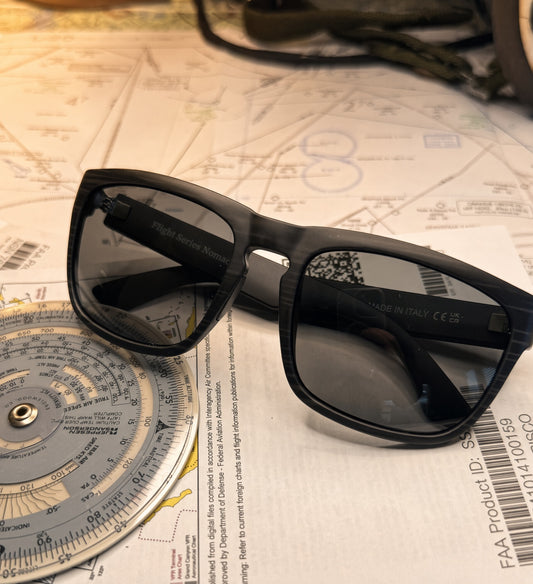
Nomad – ANSI Z80.3 Polarized — $89 → Shop the Nomad
Every pair ships free in the United States. Returns are accepted. The frames are built to live in a flight bag or flight-suit pocket without the anxiety that comes with a $300 pair.
Why This Beats the Typical Name Brand Approach
| Factor | Typical Name Brand ($280–$350) | Flight Series ($59–$89) |
|---|---|---|
| MFD / digital screen compatible polarization | Rare or absent | Standard on every pair |
| UV400 protection | Usually yes | Yes |
| ANSI Z80.3 impact rating | Sometimes | Available on Mission series |
| Price for a usable pair | $280+ | $59–$89 |
| Free U.S. shipping | Often not | Yes on every order |
| Designed by active-duty aviators | No | Yes |
| Risk if damaged or lost | High | Low — priced to be used |
The functional difference is straightforward. Most expensive aviation sunglasses still require you to accept either reduced glare control or potential screen problems. Flight Series was engineered to reduce that tradeoff. You get real polarization when you need it on the ramp, on the water, or driving to the airport, and readable displays when you are in the seat.
The price difference means you can own a primary pair, a backup, or different styles without treating them like museum pieces. Free shipping removes another barrier. The net result is gear that is more likely to be used the way it was intended.
Who These Are For
Active-duty and civilian pilots flying glass cockpits. Military members and veterans who want equipment that performs. Aviation enthusiasts who spend time around aircraft and reflective surfaces. Anyone who has bought the classic expensive pair, used it carefully for a season, and then started reaching for something cheaper because they did not want to risk the “good” ones.
Men who simply want sunglasses that look right with a flight jacket or weekend truck and still work when the mission starts.
Frequently Asked Questions
Can polarized sunglasses be used in a glass cockpit? Ordinary polarized sunglasses often black out or distort MFDs and LCD screens. Pilot Polarized (MFD-compatible) lenses are specifically engineered to cut glare while keeping digital displays readable.
Why are most recommended aviation sunglasses non-polarized? Because standard polarization conflicts with the polarizing layers in modern cockpit displays. The industry default became “just avoid polarization” instead of solving the underlying optical problem.
Is the ANSI Z80.3 rating important? It provides verified impact protection via the FDA steel-ball test. For pilots who want that extra mechanical assurance, the Flight Line series (Zulu, Ember, Alpha, Nomad) includes it at the same $89 price point.
Do these work outside the cockpit? Yes. The same polarization that stays compatible with MFDs still reduces glare on the road, on the water, and in bright outdoor conditions.
Bottom Line for 2026
The best aviation sunglasses for men this year are not the ones with the longest brand history or the highest price. They are the ones that solve the actual problems pilots face: high UV at altitude, real glare, digital displays that cannot be compromised, and the need for durable gear that does not require a second mortgage.
Flight Series delivers Pilot Polarized performance that works with MFDs, full UV400 protection, solid build quality, and free U.S. shipping — at $59 for the Signature series and $89 for the impact-rated Flight Line series or the Maverick + Ghost bundle.
That combination of function, price, and practicality is still rare. The Maverick, Ghost, Pilot’s Pair, and the ANSI-rated Zulu, Ember, Alpha, and Nomad are built for the way pilots actually fly in 2026.