Why Impact Resistance Matters in Pilot Sunglasses
When it comes to eyewear, style and comfort matter — but strength matters more. The last thing you want is for your sunglasses to crack, shatter, or fail the moment debris, turbulence, or an unexpected impact hits them.
Most fashion sunglasses are not engineered for that reality. They look fine until they don’t.
Who This Is For
This is written for pilots, military and tactical users, and anyone who treats their sunglasses as working gear rather than a fashion accessory.
The Risks of Weak Sunglasses
Low-quality lenses and frames create real problems:
- Lenses that crack or shatter on impact can send fragments toward the eye.
- Frames that bend or break leave you without protection at the worst time.
- Optical quality degrades quickly once the surface is compromised.
In a cockpit, on the range, or in the field, these are not theoretical risks. Sunglasses need to absorb energy and stay intact.
What Real Impact Resistance Requires
For non-prescription sunglasses, the relevant U.S. standard is ANSI Z80.3. It includes the FDA-mandated impact test (21 CFR 801.410):
- A 5/8-inch steel ball is dropped from 50 inches onto the lens.
- The lens must not fracture.
This is the performance floor Flight Series builds to. (Note: ANSI Z87.1 is a different, more industrial/occupational standard. Flight Series is rated to the sunglasses standard ANSI Z80.3 that includes the FDA steel-ball requirement.)
Beyond the impact test, durable sunglasses also need:
- Scratch- and smudge-resistant coatings so clarity lasts
- Lightweight but tough TR90 frames that flex instead of breaking
- A secure, anti-slip fit that stays in place
- Full UV400 protection
- For pilots: polarization that remains mostly compatible with MFDs and digital displays
The Practical Choice in 2026
Most $280–$350 name-brand aviation sunglasses emphasize heritage or materials. Fewer combine a verified impact standard with true MFD-compatible polarization at a price that encourages daily use.
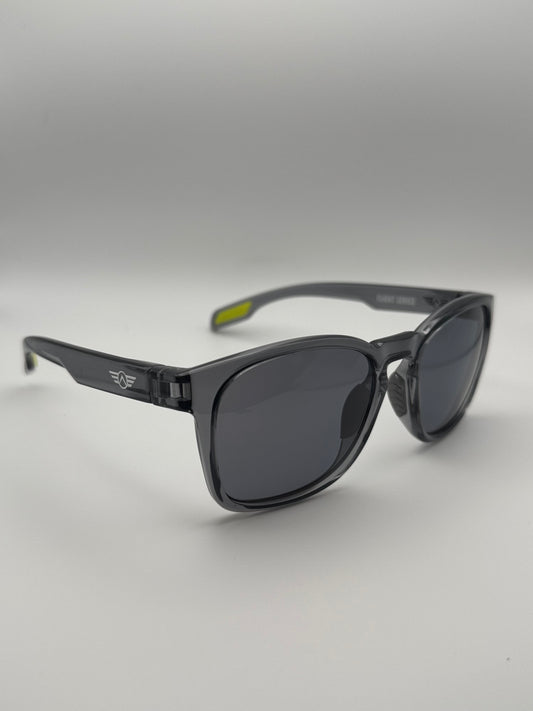
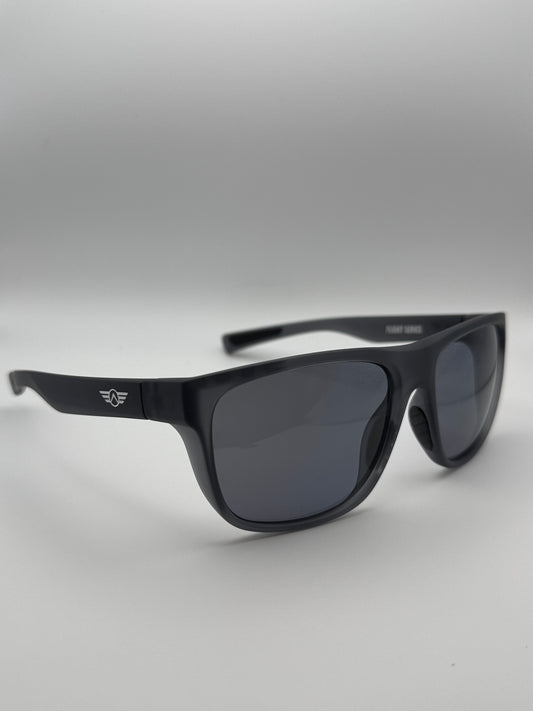
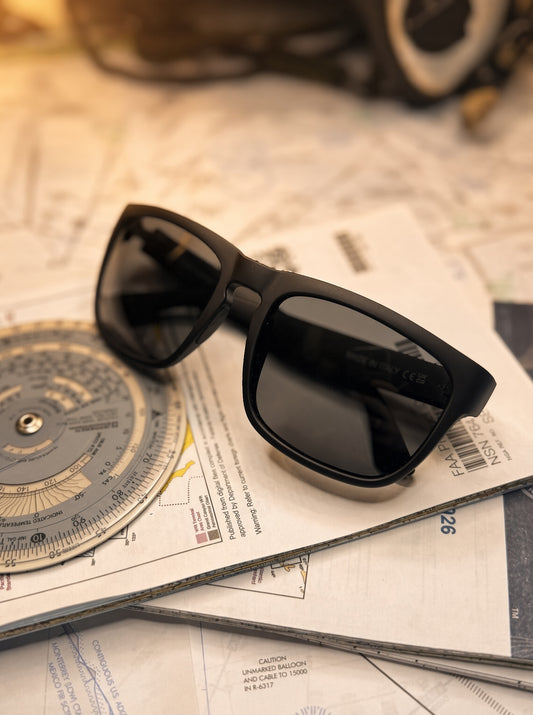
Flight Series was built by active-duty Naval Aviators to close that gap. Every pair meets ANSI Z80.3 impact performance, uses Pilot Polarized lenses, includes protective coatings, and ships free in the United States.
If you want the pair that solves this right now, start here:
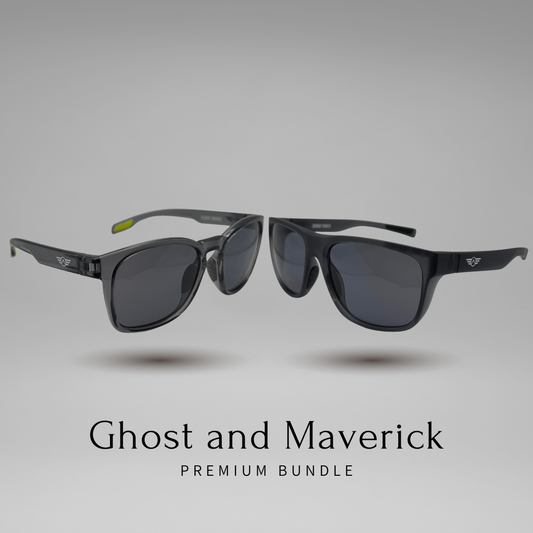
→ Maverick – Polarized MFD Sunglasses — $59 → Pilot’s Pair (Maverick + Ghost) — $89
Full Current Options
Signature Series
- Maverick – Polarized MFD Sunglasses — $59 → Shop the Maverick
- Ghost – Polarized MFD Sunglasses — $59 → Shop the Ghost
- Pilot’s Pair — Maverick + Ghost Bundle — $89 → Get the Pilot’s Pair
Flight Line Series (ANSI Z80.3)
- Zulu – ANSI Z80.3 Polarized — $89 → Shop the Zulu
- Ember – ANSI Z80.3 Polarized — $89 → Shop the Ember
- Alpha – ANSI Z80.3 Polarized — $89 → Shop the Alpha
- Nomad – ANSI Z80.3 Polarized — $89 → Shop the Nomad
All orders ship free in the United States.
Bottom Line
Impact resistance is not a marketing extra. It is a tested performance requirement for anyone who relies on their eyewear in demanding environments. ANSI Z80.3 (including the FDA steel-ball test), Pilot Polarized lenses that work with MFDs, full UV400 protection, and durable coatings deliver that performance at a price that makes sense.
The Maverick and Ghost start at $59. The Pilot’s Pair and the Flight Line models are $89. Free U.S. shipping on every order.
Related Reading
- Understanding Impact Ratings in Pilot Sunglasses: ANSI Z80.3 Explained
- Why Scratch and Smudge Resistance Matter in Pilot Sunglasses
- Why Traditional Polarized Sunglasses Are Dangerous in the Cockpit