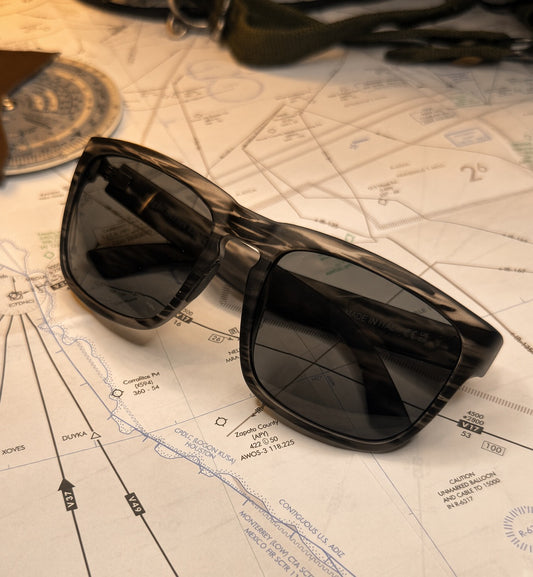
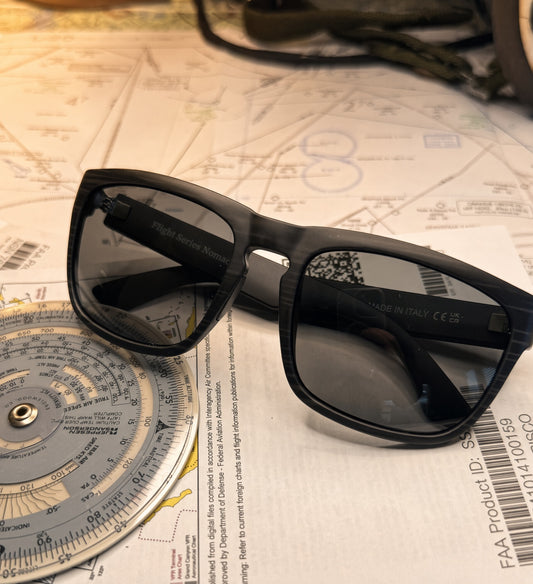
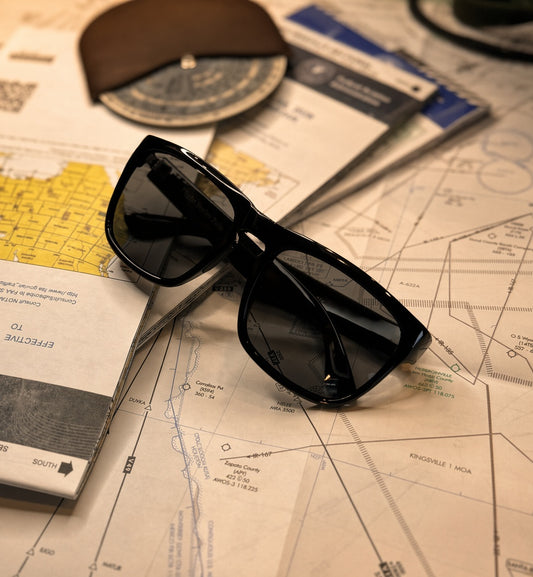
MFD-Compatible Sunglasses for Pilots: What They Are and Why They Matter
What Is an MFD, and Why Do Sunglasses Affect It?
A multifunction display (MFD) is the digital screen in your cockpit that consolidates navigation, engine data, weather, terrain, and traffic information into a single interface. Whether you're flying a Garmin G1000, a Dynon Skyview, or a legacy glass panel, your MFD is one of the most critical instruments in the aircraft.
Here's the problem: most MFDs and glass panel displays emit light that is polarized — or at minimum, filtered in a way that interacts with polarized lenses. When the polarization angle of your sunglasses aligns perpendicularly with the polarization of the display, the result is a near-total blackout of the screen. Tilt your head slightly and the display comes back. Tilt it the other way and it disappears again.
This isn't a minor inconvenience. In IMC transitions, during high-workload phases of flight, or in any situation where you need to scan your instruments quickly, a display that flickers in and out based on your head angle is a genuine safety hazard.
Why Standard Polarized Lenses Fail in the Cockpit
Polarized lenses work by filtering horizontally polarized light — the kind that creates glare off water, roads, and flat surfaces. For driving, fishing, or hiking, this is exactly what you want. The lenses cut glare dramatically and improve visual comfort.
But cockpit displays don't emit the same kind of light as a flat road surface. Many MFDs use LCD technology with built-in polarizing filters oriented at specific angles. When your sunglass lenses are polarized at a conflicting angle, the two filters cancel each other out — and your display goes dark.
The issue is compounded by the fact that different manufacturers orient their display polarization differently. Some displays are more susceptible than others. And because pilots are constantly moving their heads — scanning instruments, checking charts, communicating — the angle between lens and display is constantly changing.
Standard polarized sunglasses, even expensive ones, are not designed with cockpit displays in mind. They're designed for ground-level glare. That's a fundamentally different optical problem.
What Makes a Lens MFD-Compatible?
MFD-compatible lenses are engineered to reduce glare without creating the polarization conflict that blacks out digital displays. There are a few ways manufacturers achieve this:
Non-polarized tinted lenses with anti-reflective coatings reduce glare through absorption and reflection management rather than polarization filtering. They don't interact with display polarization at all, making them inherently safe for cockpit use — though they sacrifice some of the glare-cutting performance of true polarized lenses.
Specially oriented polarized lenses are designed with the polarization axis positioned to minimize conflict with the most common MFD display orientations. This is the more technically demanding approach, and when done correctly, it allows pilots to get the glare-reduction benefits of polarization without losing display clarity.
Lens tint and transmission rate also matter. A lens that's too dark reduces overall light transmission and makes it harder to read displays in low-light conditions. Aviation-appropriate lenses typically target a visible light transmission (VLT) in the 15–30% range — dark enough to cut glare at altitude, light enough to maintain instrument readability.
The key is that MFD compatibility isn't a marketing claim — it's a verifiable optical characteristic. If a manufacturer can't explain how their lenses achieve display compatibility, that's a red flag.
ANSI Z87.1 and Why Impact Rating Matters Too
While MFD compatibility addresses the display problem, it's only one part of what makes a sunglass suitable for aviation. Impact resistance is the other critical factor that's often overlooked.
ANSI Z87.1 is the American National Standard for occupational eye and face protection. Sunglasses that meet this standard have been tested to withstand high-velocity impact — the kind that can occur in a bird strike, canopy breach, or any number of inflight scenarios that expose the pilot's face to projectile hazards.
Standard fashion sunglasses are not impact rated. Their lenses can shatter on impact, turning a survivable incident into a vision-threatening one. For military aviators, ANSI Z87.1 compliance is often a requirement. For civilian pilots, it's simply the smart choice.
When evaluating pilot sunglasses, look for both MFD compatibility and ANSI Z87.1 certification. These two standards together define what a cockpit-ready sunglass actually is.
UV400 Protection at Altitude
UV exposure increases approximately 5% for every 1,000 feet of altitude gained. At 10,000 feet, you're receiving roughly 50% more UV radiation than you would at sea level. At cruise altitude in a pressurized aircraft, the numbers are even more significant.
UV400 protection means the lens blocks all ultraviolet light up to 400 nanometers — covering both UVA and UVB wavelengths completely. This is the standard you should require in any aviation sunglass. Anything less leaves your eyes exposed to cumulative UV damage that compounds over a flying career.
The combination of UV400 protection, ANSI Z87.1 impact resistance, and MFD-compatible polarization defines the minimum standard for pilot eyewear. Each addresses a distinct threat. None of them is optional.
Frame Fit and Comfort for Long Missions
Optical performance means nothing if the frame doesn't stay in place. Pilots wearing headsets, helmets, or oxygen masks need frames that sit securely without creating pressure points or interfering with equipment seals.
Key frame features for aviation use include:
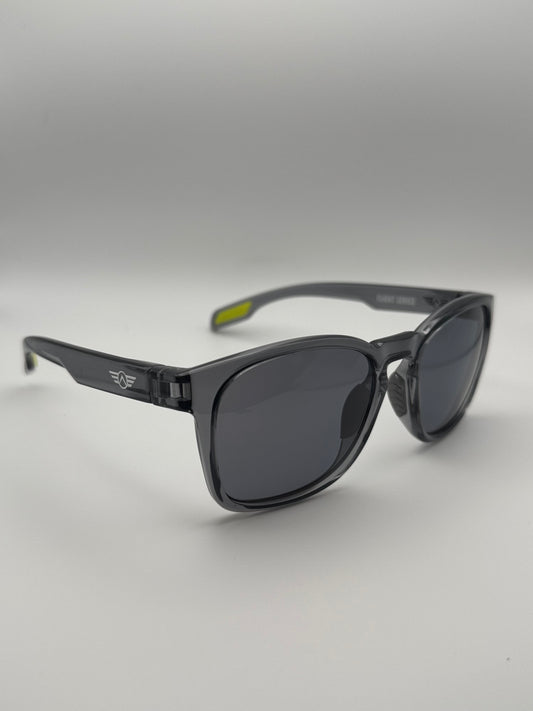
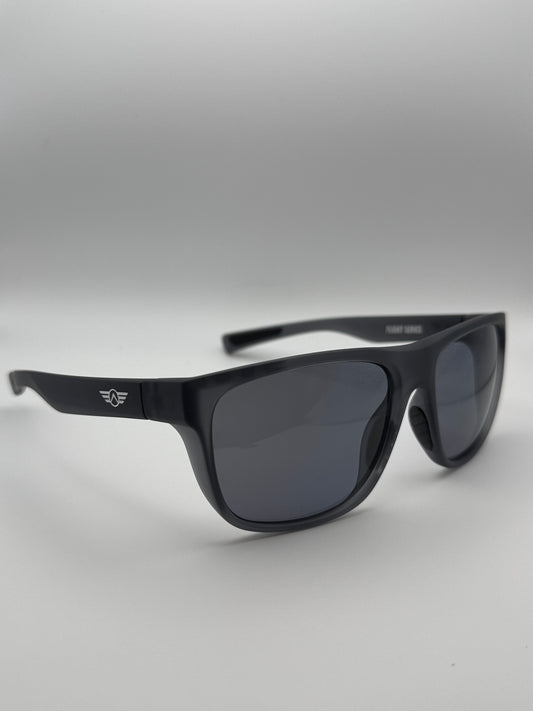
- Lightweight construction — TR90 Grilamid frames offer excellent strength-to-weight ratio and resist deformation under headset pressure
- Anti-slip grip — rubber or rubberized nose pads and temple tips prevent the frame from sliding during high-G maneuvers or in humid cockpit environments
- Low-profile temples — slim temple arms that don't create gaps in headset ear seals or oxygen mask seals
- Wraparound coverage — reduces peripheral light intrusion without restricting field of view
A frame that shifts during a critical phase of flight is more than uncomfortable — it's a distraction. Fit is a safety consideration, not just a comfort one.
What to Look for When Buying Pilot Sunglasses
When evaluating any sunglass for cockpit use, run through this checklist:
- MFD/screen compatibility — confirmed by the manufacturer, not just implied
- ANSI Z87.1 certification — impact rated for occupational use
- UV400 protection — full UVA and UVB blockage
- Appropriate VLT — 15–30% for most flying conditions
- Lightweight, secure frame — TR90 or equivalent, with anti-slip features
- Designed by people who fly — this matters more than it sounds
The last point is worth emphasizing. Sunglasses designed by pilots for pilots reflect an understanding of the cockpit environment that general eyewear brands simply don't have. The tradeoffs that matter — display compatibility over maximum glare reduction, secure fit over fashion profile, impact resistance over lens thinness — are only obvious to someone who has actually flown with the wrong pair.
The Bottom Line
MFD-compatible sunglasses aren't a niche product for a niche problem. They're the correct answer to a real safety question that every pilot flying a glass cockpit faces. Standard polarized sunglasses — regardless of price or brand reputation — are not designed for the cockpit environment and can actively degrade your situational awareness when you need it most.
The right pair of pilot sunglasses combines MFD-compatible optics, ANSI Z87.1 impact protection, UV400 coverage, and a frame built to stay in place through a full mission. That's the standard. Everything else is a compromise.