Most Comfortable Sunglasses for Pilots: What to Look For and Why It Matters

Most Comfortable Sunglasses for Pilots: What to Look For and Why It Matters

Whether you're flying a Cessna 172 on a clear Saturday morning or executing a night approach in the left seat of a C-130, your sunglasses are one of the most important pieces of equipment in the cockpit. And yet most pilots settle for whatever is sitting on the rack at the airport gift shop. The result? Eye strain, headaches, distorted MFD screens, and frames that dig into your temples under a headset after the first hour.

Comfort for pilots isn't the same as comfort for someone wearing shades at the beach. It demands a specific convergence of fit, frame engineering, lens technology, and cockpit compatibility. In this guide, we break down exactly what separates genuinely comfortable pilot sunglasses from the rest — and why what you wear behind the glass matters more than most pilots realize.


Why Pilot Comfort Is a Safety Issue, Not Just a Preference

Discomfort is distracting. Any aviator who has wrestled with fogged lenses, pressure points from thick frames under a headset, or a polarized lens that blacks out the G1000 screen mid-approach knows this firsthand. These aren't minor annoyances — they pull your scan, increase workload, and in critical phases of flight, distraction has consequences.

The FAA recommends that pilots wear sunglasses that meet specific optical quality and UV protection standards. Beyond that baseline, pilots need eyewear that works with the cockpit environment rather than against it. That means frames that stay in place through turbulence, lenses that don't fight your MFDs, and materials light enough to wear for a four-hour cross-country without leaving a mark.


What Makes Sunglasses Comfortable for Pilots Specifically?

Frame Weight and Material

The single biggest comfort factor for long-duration wear is frame weight. Heavy frames shift, slide, and create pressure points — especially under aviation headsets, which already apply lateral clamping force to the temples. Lightweight composite materials like TR90 thermoplastic are the gold standard for pilot eyewear. TR90 is flexible enough to absorb stress during headset removal without warping, and resilient enough to maintain its shape after thousands of cycles.

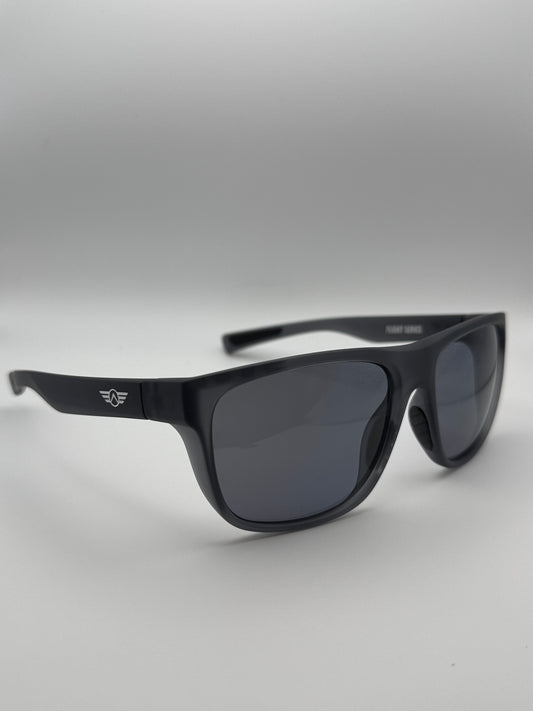
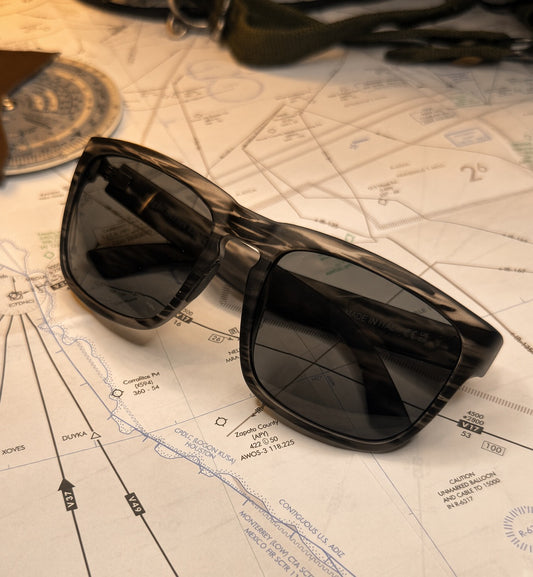
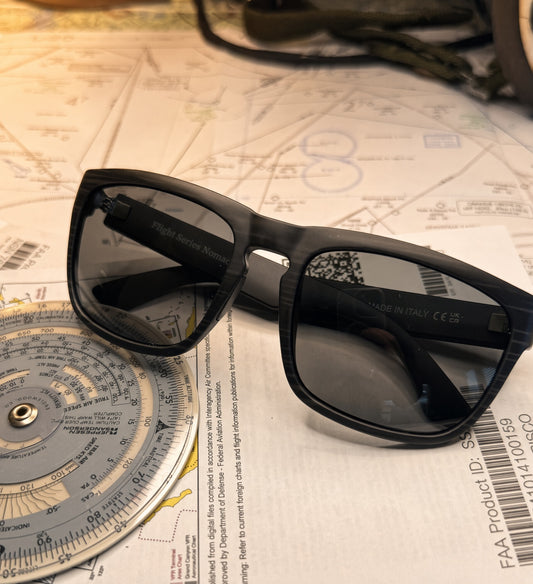
The Flight Series Maverick is built on a TR90 composite frame specifically engineered with this problem in mind. Developed by active-duty Naval Aviators who wore headsets operationally for hours at a time, the Maverick's frame geometry is designed to coexist with aviation headsets rather than compete with them. The result is a frame you stop noticing after the first few minutes — which is exactly what you want in the cockpit.

Lens Polarization — But the Right Kind

Polarized lenses reduce glare significantly, which is critical at altitude where UV intensity is markedly higher than at sea level. At 10,000 feet, UV exposure increases by roughly 30% compared to ground level, and forward-facing pilots deal with direct solar glare, water reflection, and haze scatter simultaneously.

The problem is that standard polarized lenses interact badly with the LCD and MFD screens that modern glass cockpits depend on. The polarization angles can render screens dark, distorted, or completely unreadable at certain viewing angles — a genuinely dangerous situation when you're trying to cross-check an instrument scan.

This is the core engineering challenge that Flight Series was built to solve. Their screen-compatible polarization cuts glare and enhances contrast while remaining compatible with Multi-Function Displays, HUDs, and LCD panels. Traditional polarized sunglasses create a dangerous blind spot in the cockpit. Flight Series lenses are specifically engineered to avoid that problem, giving pilots the glare reduction they need without the display interference they don't.

UV Protection: UV400 Is the Minimum Standard

At cruise altitude, UV radiation exposure increases substantially. The ozone layer provides less protection at elevation, and pilots operating near water or snow face additional reflected UV load. Cumulative UV exposure is a known risk factor for cataracts and macular degeneration — conditions that can end a flying career.

UV400 protection — blocking near 100% of both UVA and UVB radiation up to 400 nanometers — is the recognized benchmark for serious eye protection. Both the Maverick and the Ghost deliver full UV400 protection, engineered to meet international optical safety standards. This isn't a marketing claim — it's a measurable specification that matters for long-term ocular health in anyone who spends significant time above the clouds.

Scratch and Smudge Resistance

Cockpit life is hard on lenses. Briefing documents, kneeboard edges, headset cables, and the simple routine of stuffing glasses into a flight bag all conspire to scratch unprotected lenses. Scratched lenses create hazing and light scatter, which increases eye strain and fatigue — the opposite of what you need during a long flight.

Flight Series lenses feature both scratch-resistant and oleophobic (smudge-repelling) coatings as standard. The oleophobic coating is particularly practical in the cockpit, where sweating under a headset or wiping lenses with the nearest available surface is a reality. A quick wipe on a clean cloth restores full optical clarity without leaving smear trails behind.


The Maverick: Built for the All-Day Mission

The Flight Series Maverick is the flagship pilot sunglass, and it earns that title through engineering specificity rather than marketing. The TR90 frame keeps weight minimal. The MFD-compatible polarization handles the cockpit screen problem. UV400 protection covers the altitude UV problem. Scratch and smudge resistance handles the durability problem.

What pilots who fly the Maverick consistently report is that it disappears on your face. After the first hour, you stop being aware that you're wearing sunglasses — you're simply seeing clearly, without squinting, without adjusting, without fighting the headset. That is the definition of comfortable pilot eyewear.

At $79, the Maverick sits in a price range that serious pilots will recognize as genuinely reasonable for purpose-built aviation eyewear. This isn't a lifestyle accessory built for the tarmac photo — it's functional equipment designed from the ground up by people who fly operationally.


The Ghost: A Different Profile, the Same Mission

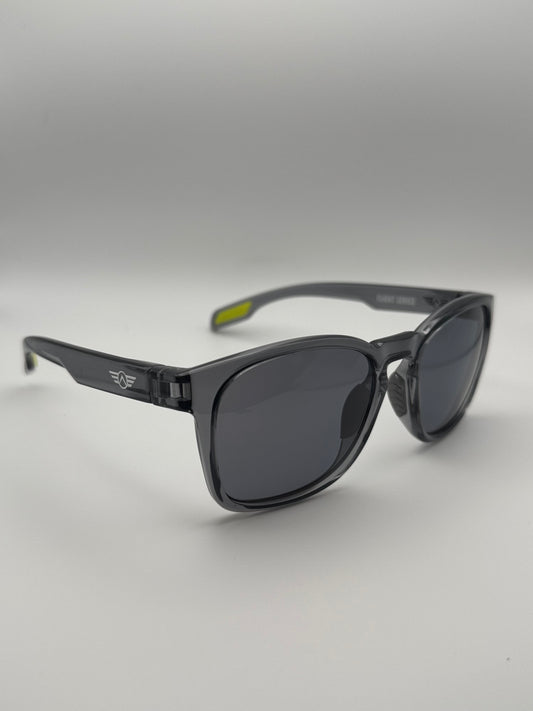
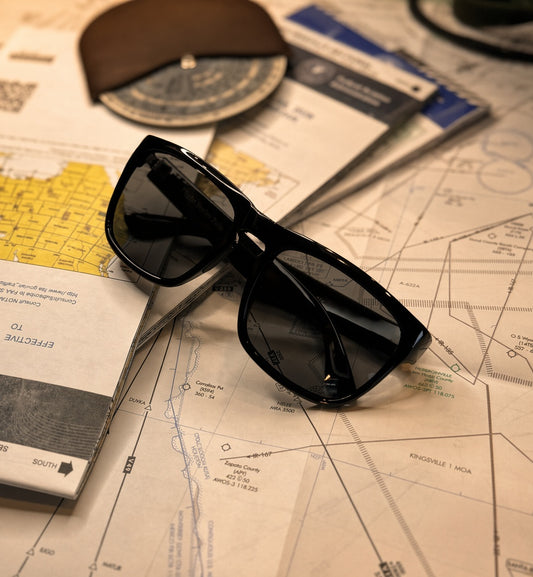
Not every pilot face is the same, and not every cockpit environment is the same. The Flight Series Ghost offers a distinct frame profile and lens configuration that appeals to pilots who want an alternative fit or aesthetic without sacrificing any of the performance fundamentals.

The Ghost carries the same core technology stack — screen-compatible polarization, UV400 protection, TR90 composite frames, impact-resistant lenses, and oleophobic coatings — in a different form factor. Some pilots prefer the Ghost for instrument cross-country flying; others reach for the Maverick for VFR days and high-altitude ops. Having both in the bag is a legitimate strategy for pilots who fly across a range of conditions and missions.

The Ghost is also rated 5.0/5 by verified purchasers, with pilots citing optical clarity and display compatibility as the standout features. For $79, it delivers the same value proposition as the Maverick: serious pilot eyewear at a price point that doesn't require a separate line in the aircraft operating budget.


The Pilot's Pair Bundle: Both in the Bag for $129

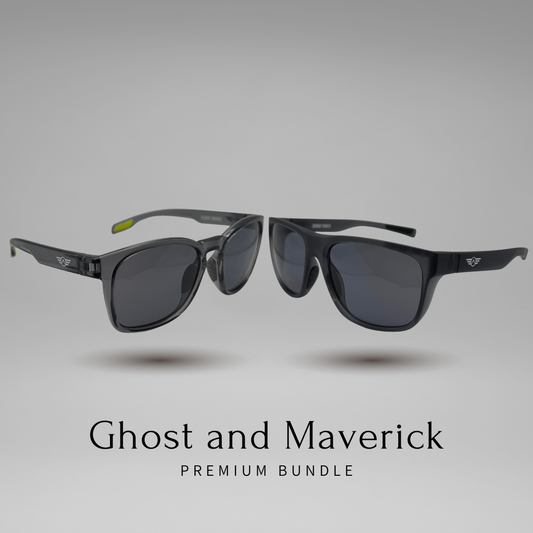
For pilots who want the flexibility of two purpose-built options, the Pilot's Pair — Maverick + Ghost Bundle combines both models at $129 — a $29 savings off the individual retail price of $158.

This is the practical solution for pilots who fly in varied conditions. The Maverick on a bright, hazy VFR day. The Ghost for low-sun approaches or overcast IFR environments where a slightly different lens tint or profile makes a meaningful difference. Having both means you're never reaching for the wrong tool.

The bundle also makes a strong case for gift-giving within the aviation community — instrument checkride, first solo, type rating completion. These are genuine functional gifts rather than novelty items.


What to Avoid in Pilot Sunglasses

To round out this guide, it's worth naming what not to reach for. Generic polarized sunglasses from lifestyle brands are built for water sports or street use, not cockpits. Their polarization angles are not designed with MFD compatibility in mind. Their frames are often heavy acetate or metal, which creates headset pressure issues. And their lens coatings rarely address the smudge and scratch durability demands of cockpit use.

The other category to avoid is sunglasses that prioritize style over optical quality. Distortion in the lens — even mild distortion — creates visual fatigue during sustained scan patterns. Pilots who wear fashion sunglasses often report headaches and tired eyes on long flights without understanding why. Optical clarity and lens geometry matter.


Final Approach

The most comfortable sunglasses for pilots are the ones you stop noticing at cruise altitude — because the fit is dialed, the lenses are doing their job, and nothing is fighting your instruments or your headset. Flight Series Eyewear was built specifically to get out of your way and let you fly.

The Maverick, the Ghost, and the Pilot's Pair Bundle represent the current standard for purpose-built pilot eyewear: MFD-compatible polarization, TR90 composite frames, UV400 protection, and all-day wearability designed by Naval Aviators who knew exactly what was missing from the market.

See your mission clearly.


Flight Series Eyewear is engineered by active-duty Naval Aviators and purpose-built for pilots, aircrew, and tactical professionals. Free shipping on all sunglasses at flightserieseyewear.com.

Back to blog