Why Impact-Rated Sunglasses Matter — And What ANSI Z80.3 Actually Means
Most sunglasses on the market have never been formally tested for what happens when something hits them. That's not a knock on any particular brand — it's just the reality of how the eyewear industry works. A pair of sunglasses can look the part, have a great lens tint, and offer decent UV protection without ever being subjected to a single standardized impact test.
For everyday use, that might be acceptable. For flying, it's worth thinking about more carefully.
The cockpit is not a controlled environment. Bird strikes happen. Debris gets kicked up. Sudden decompression events, aerobatic maneuvers, turbulence — any of these can turn an unsecured object into a projectile. Your sunglasses are the only thing between that and your eyes. Whether they hold together when it matters is a question worth asking before you need to find out.
That's where impact ratings come in, and specifically where ANSI Z80.3 is relevant.
What ANSI Z80.3 Actually Requires
ANSI Z80.3 is the American National Standards Institute standard for nonprescription sunglasses sold in the United States. It covers a range of performance requirements — UV protection, optical clarity, transmittance, flammability, frame corrosion resistance — but the piece most relevant to this conversation is the impact resistance requirement.
The impact test built into ANSI Z80.3 is based on FDA regulation 21 CFR 801.410, which mandates impact resistance for all eyewear sold in the U.S. The specific test is commonly called the drop ball test: a steel ball, 5/8 of an inch in diameter, weighing just over half an ounce, is dropped from a height of 50 inches directly onto the lens. To pass, the lens cannot fracture, chip, or crack.
That's a real test with a real pass/fail standard. The lens either holds or it doesn't. A pair of sunglasses carrying a legitimate ANSI Z80.3 rating has physically gone through this evaluation — it hasn't just been checked for lens color or UV coating.
This matters because a lens that fractures on impact doesn't protect your eye. It becomes the hazard. Impact-resistant lenses are specifically designed to absorb and distribute that energy without shattering into sharp fragments that can cause far more damage than the original impact.
What It Isn't — And Why That's Fine
To be straightforward: ANSI Z80.3 is not a ballistic rating. It's not MIL-SPEC. It's not the same standard that governs protective eyewear for active combat environments, where the requirements are significantly more demanding and the threats being guarded against are categorically different.
If your job involves fragmentation hazards or high-velocity projectiles, you need ballistic-rated eyewear and that's a different conversation entirely.
But for the vast majority of pilots, the relevant hazards are not ballistic. They're bird strikes, FOD, turbulence, and the kind of low-probability, high-consequence events that don't fit neatly into categories but happen in cockpits. For those scenarios, the question isn't whether your sunglasses are rated to stop a rifle round — it's whether the lens will hold together rather than shatter when something hits it.
ANSI Z80.3 answers that second question. And most sunglasses on the market cannot answer it at all, because they've never been tested.
There's a meaningful difference between sunglasses built to a verified impact standard and sunglasses that are simply sold as eyewear with no structural testing behind them. That gap is wider than most people realize, and it's the reason an impact rating matters even outside of extreme-use environments.
The Cockpit Case for Impact-Rated Lenses
The FAA's own guidance on pilot eyewear notes that sunglasses serve a protective function beyond UV filtering — specifically, that they protect a pilot's eyes from impact with objects including flying debris, bird strikes, and sudden decompression events. That language is intentional. The FAA isn't describing edge cases. It's describing the real operating environment of an aircraft cockpit.
Open-cockpit aircraft are an obvious example, but even in enclosed cockpits the considerations exist. A cracked or compromised windscreen, an object that finds its way into the cockpit, the kind of rare but not impossible mechanical events that aviation safety data documents over decades of operations — these are part of the landscape.
Wearing sunglasses that meet an established impact standard doesn't eliminate those risks. Nothing does. But it means that if something does reach your face, the lenses are built to handle it rather than add to the problem.
That's a reasonable standard to hold your cockpit eyewear to. And it's a standard that's more selective than it might appear, because so many sunglasses simply don't meet it.
The Flight Series Pairs That Meet ANSI Z80.3
Every Flight Series pair built to this standard has been through the testing. Here's where to find them:
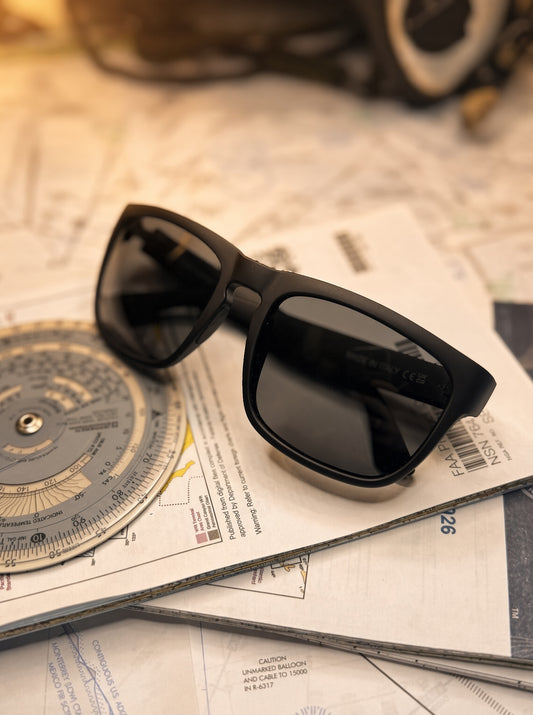
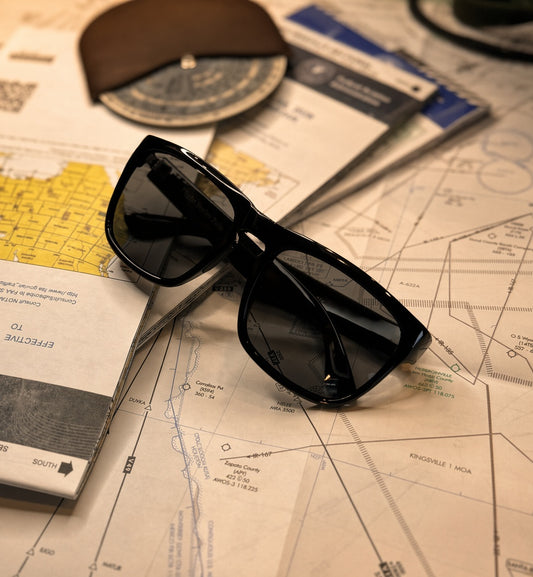
The Zulu is the workhorse of the lineup — a pilot-first design built for long days in the cockpit. ANSI Z80.3 impact rated, with a neutral gray lens that doesn't distort color. The Zulu is the pair you reach for when the mission is the priority and the gear needs to get out of the way.
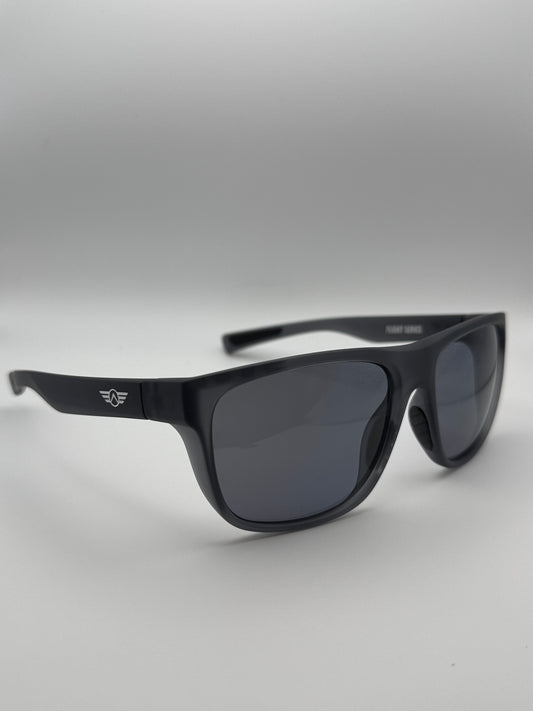
The Alpha takes a more aggressive matte frame profile while keeping the same cockpit-ready lens spec. Impact rated, pilot polarized, and built for pilots who want something that carries over from the cockpit to wherever the day goes after wheels down.
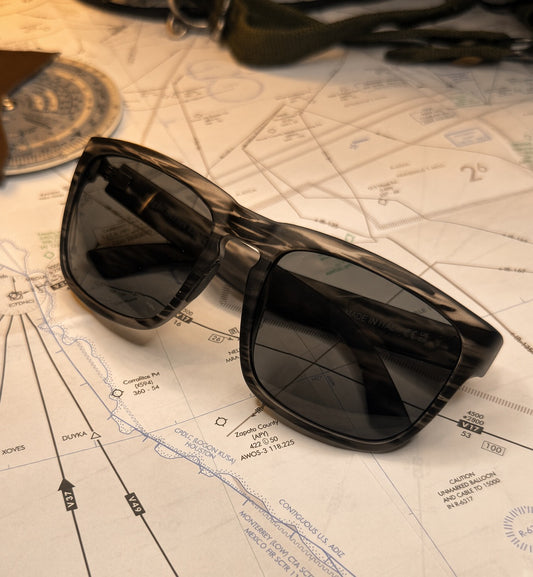
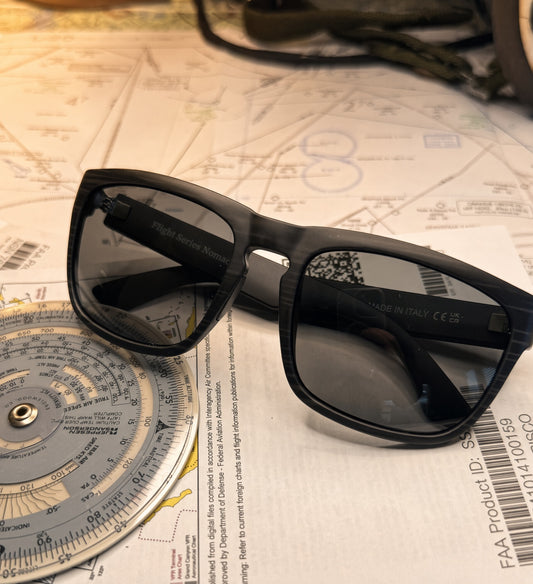
The Nomad is designed for pilots who operate across environments — the pair that works at 10,000 feet and looks equally at home on the ground. ANSI Z80.3 rated lenses, built around a frame that fits clean under a headset and stays put when it needs to.
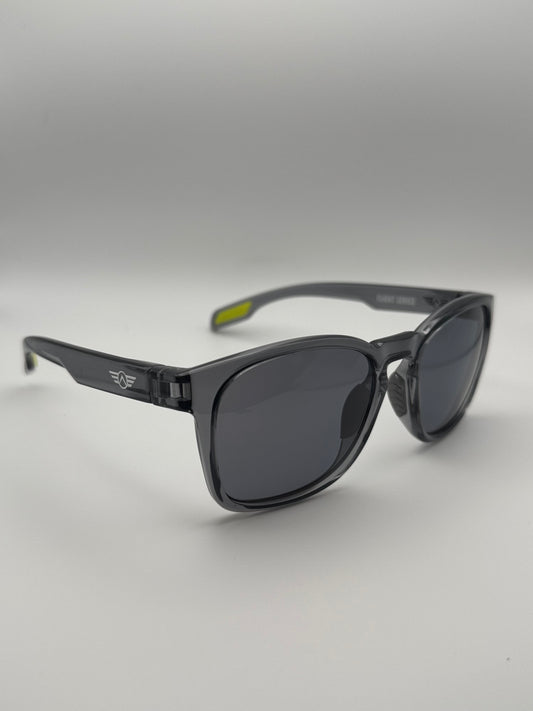
The Ember is a cleaner, translucent frame, — while still meeting the ANSI Z80.3 impact standard. For pilots flying into variable light conditions or those who prefer the contrast enhancement, the Ember is worth a look.
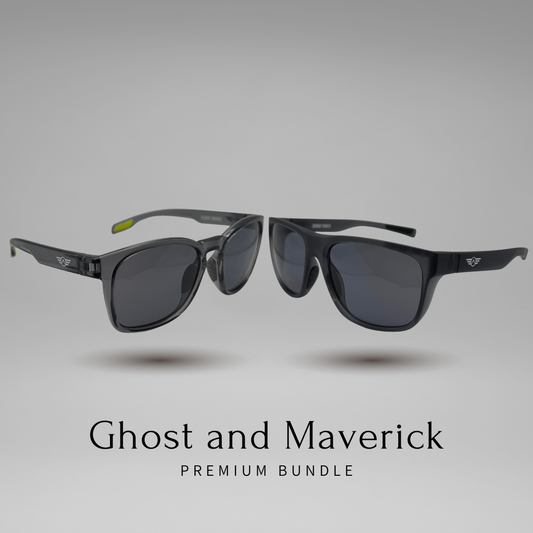
All four are pilot polarized, cockpit-compatible, and rated to the same impact standard. The difference between them is frame color.
What to Look for When Buying Sunglasses for the Cockpit
If you're evaluating eyewear for flying and impact protection is on your checklist, here's what to actually verify:
Look for ANSI Z80.3 certification explicitly stated. Not implied, not suggested — stated. If a product page doesn't mention the standard by name, assume the lenses haven't been tested to it.
Confirm the lenses are non-polarized. This is a separate consideration from impact rating, but it's equally important in the cockpit. Polarized lenses interfere with the readability of MFDs, glass panels, and electronic flight bag screens — and they can reduce your ability to spot traffic by masking light reflected off other aircraft. Non-polarized is the correct choice for flying.
Check that VLT (visible light transmittance) is in range. For aviation, lenses should transmit between 15 and 30 percent of visible light — dark enough to manage glare, light enough to maintain instrument readability inside the cockpit.
Consider frame fit with your headset. Thick frames or wide temples can create pressure points under headset ear cups on long flights. Thinner metal or slim composite temples tend to work better. Test the combination if you can before committing.
Impact rating is one piece of a larger picture. But it's a piece that matters, and it's one where having a verified standard behind you is meaningfully better than not having one.
The Standard Is the Floor, Not the Ceiling
ANSI Z80.3 is what the testing requires. What happens inside that frame — lens tint, optical quality, UV protection, cockpit compatibility, frame design — is where the actual product differences live.
Flight Series was built by a Naval Aviator who spent years looking for sunglasses that took the cockpit environment seriously. Not just the look of pilot eyewear, but the actual requirements: MFD compatibility, impact resistance, proper light transmittance, a frame that works with a headset. The impact rating is part of that — not a headline feature, but a baseline expectation for gear that's going to live in the cockpit.
The Zulu, Alpha, Nomad, and Ember all meet that baseline. They're built for the environment you're flying in, and they're tested to prove it.