Why Traditional Polarized Sunglasses Are Dangerous in the Cockpit
If you’ve ever slid on a pair of polarized sunglasses and watched your MFD go dark, your glass cockpit display turn into a black mirror, or your iPad EFB become nearly unreadable — you weren’t imagining things. You were experiencing one of the most overlooked safety issues in modern aviation: the polarization problem.
Most pilots know sunglasses are essential. UV radiation at altitude is no joke. Very few realize that the same polarized technology marketed as superior for outdoor use can actively interfere with the instruments they depend on.
Who This Is For
This is written for student pilots, VFR and IFR pilots flying glass cockpits, and anyone who’s already felt that moment of frustration when their sunglasses fight the displays.
The Problem Most Pilots Don’t Know They Have
On the water, on the road, or on the slopes, traditional polarized lenses do exactly what they’re supposed to: cut glare and improve contrast. In a glass cockpit the story changes.
LCD and LED displays (MFDs, PFDs, EFBs, GPS units) pass light through their own polarizing filters. Traditional polarized sunglasses have a filter oriented to block horizontal glare. When those two filters cross at the wrong angle, light from the screen is blocked. The display doesn’t just look dim — it can go completely black or show rainbow distortion.
This isn’t rare. As glass panels (Garmin G1000, Avidyne, Dynon, and similar systems) have become standard even in training aircraft, the problem has become widespread. A slight head tilt while scanning instruments is often enough to make a side-mounted MFD or tablet hard to read — exactly when workload is high.
How to Test Any Pair Before You Fly
Hold the sunglasses up to your phone, tablet, or laptop screen and slowly rotate them. If the screen goes dark or heavily distorted at certain angles, those lenses will cause problems with most cockpit displays. Most off-the-shelf polarized sunglasses, including many marketed for aviation, fail this test to some degree.
What Actually Solves It
The answer is not to abandon polarization. Pilots need glare reduction. The answer is purpose-built polarization calibrated to cut environmental glare while remaining mostly compatible with MFDs and digital cockpit displays.
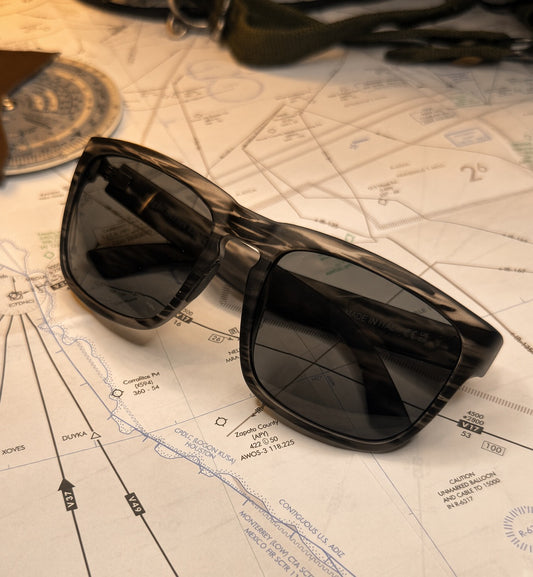
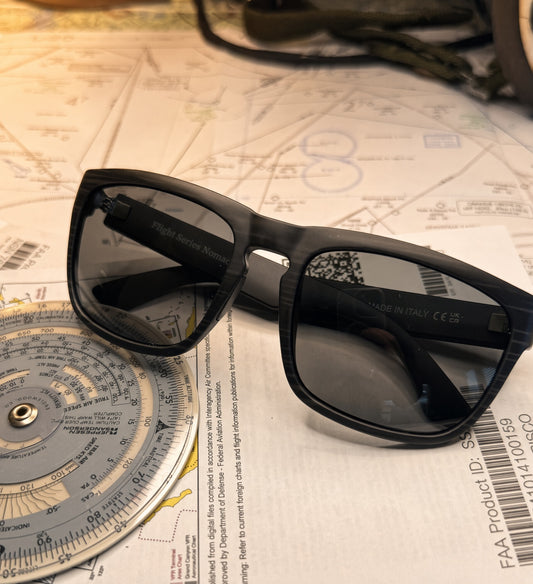
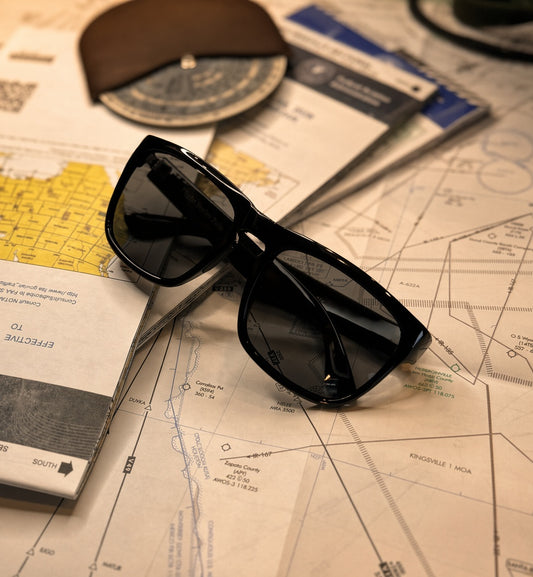
That is what Flight Series calls Pilot Polarized lenses. They deliver real glare control without the blackout risk of traditional polarized sunglasses. Every pair also includes full UV400 protection, scratch- and smudge-resistant coatings, lightweight TR90 frames, ANSI Z80.3 impact performance, and free U.S. shipping.
If you want the pair that solves this right now, start here:
→ Maverick – Polarized MFD Sunglasses — $59 → Pilot’s Pair (Maverick + Ghost) — $89 (best value)
Full Current Options
Signature Series
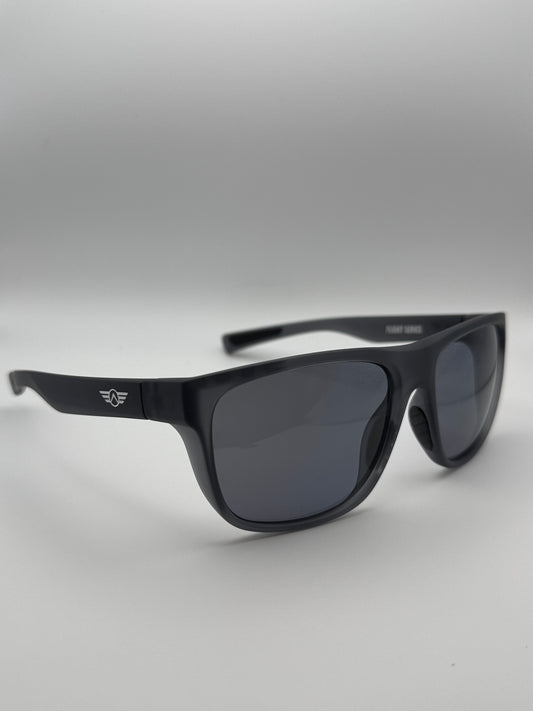
- Maverick – Polarized MFD Sunglasses — $59 Pilot Polarized (MFD-compatible), UV400, scratch & smudge resistance, TR90 frame. → Shop the Maverick
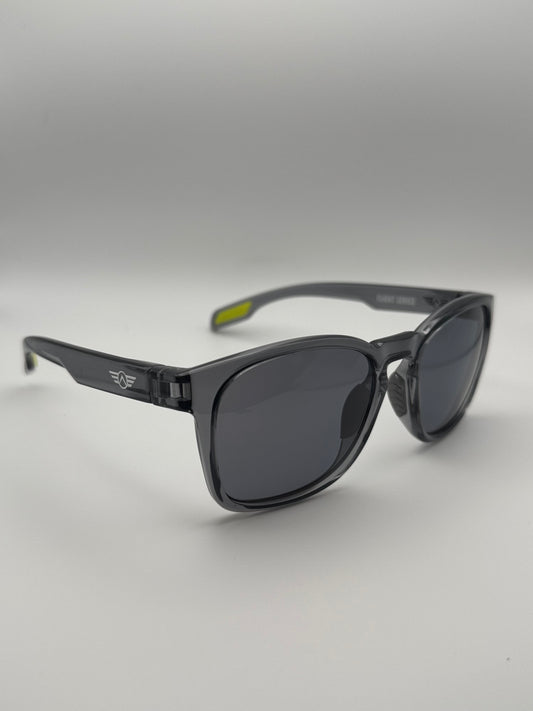
- Ghost – Polarized MFD Sunglasses — $59 Same optics in a cleaner, lower-profile design. → Shop the Ghost
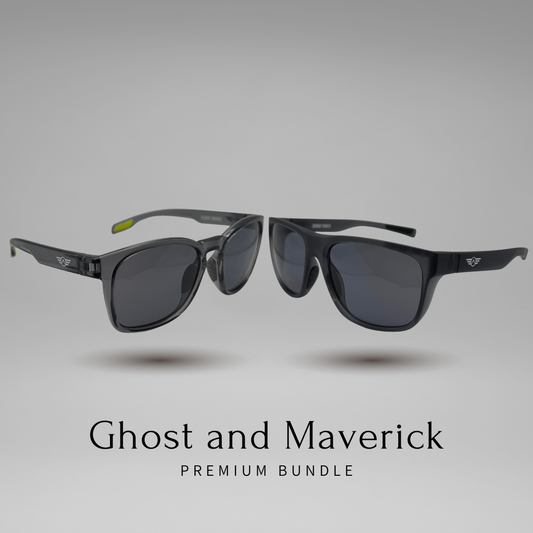
- Pilot’s Pair — Maverick + Ghost Bundle — $89 Both styles, free U.S. shipping, better value than buying separately. → Get the Pilot’s Pair
Flight Line Series (ANSI Z80.3)
- Zulu – ANSI Z80.3 Polarized — $89 → Shop the Zulu
- Ember – ANSI Z80.3 Polarized — $89 → Shop the Ember
- Alpha – ANSI Z80.3 Polarized — $89 → Shop the Alpha
- Nomad – ANSI Z80.3 Polarized — $89 → Shop the Nomad
All orders ship free in the United States.
What Pilots Should Look For
- Explicit MFD / digital screen compatibility — If the brand doesn’t address it, assume traditional polarization.
- UV400 protection — Non-negotiable at altitude.
- ANSI Z80.3 impact performance — The relevant sunglasses standard that includes the FDA steel-ball test.
- Scratch- and smudge-resistant coatings — Cockpit environments are hard on lenses.
- Lightweight, headset-friendly frames — TR90 that stays comfortable for hours.
Why This Beats Most Expensive Alternatives
Many $280–$350 name-brand aviation sunglasses either skip polarization or use traditional polarization that conflicts with glass cockpits. You pay a premium and still face the same tradeoff. Flight Series was built by active-duty Naval Aviators specifically to remove that tradeoff at a price working pilots can use every day.
Bottom Line
The polarization problem is real and completely avoidable. Traditional polarized sunglasses can degrade the very instruments you rely on. Purpose-built Pilot Polarized lenses cut glare while keeping MFDs and digital displays readable.
The Maverick and Ghost start at $59. The Pilot’s Pair and the ANSI-rated Flight Line models are $89. Free U.S. shipping on every order.
See your mission clearly. Your instruments depend on it.
Related Reading