Best Sunglasses for Airline and Commuting Pilots
Airline flying and commuting are not weekend VFR in a 172. You are in a headset for hours. You are looking through a windshield that throws glare. You are scanning glass. You may also be deadheading with a tablet in your lap.
The wrong sunglasses do one of two things. They leave you squinting on the ramp and at altitude. Or they cut glare and then wash out the displays.
That is the crew-room problem. A lot of the $280–$350 “real pilot” pairs skip polarization so the screens stay readable. You pay for the name and still fight the sun.
Flight Series was built by military aviators for that exact gap. Veteran-owned. The Maverick and Ghost are $59. The Pilot’s Pair is $89. Pilot Polarized lenses, full UV400, ANSI Z80.3 impact-rated, scratch- and smudge-resistant coatings, TR90 frames, free U.S. shipping. Not tested or verified on HUDs.
Who This Is For
Airline pilots, regional crews, commuting pilots, and anyone living in a glass flight deck who wants polarized sunglasses that still work with MFDs, LCDs, and tablets.
The Airline and Commuter Problem
You do not get to pick the sun angle. Early show. Late arrival. Winter glare off snow. Summer bounce off concrete. A commute in a 737 jumpseat or a regional jet right seat is a long visual day.
Heritage frames show up in a lot of flight bags because they look correct and they do not black out the panel — because they are often non-polarized. That solves one problem and ignores the other.
Traditional polarized sunglasses solve glare and create a new one. Digital displays emit polarized light. Cross those filters at the wrong head angle and the screen dims, rainbows, or goes dark. On a commuter tablet that is annoying. On an MFD it is a reason to take the glasses off.
You should not have to choose.
What to Demand
1. Pilot Polarized / MFD-LCD compatible
Glare control that stays mostly compatible with digital cockpit displays and tablets. If the brand only says “polarized,” assume traditional polarization.
2. Full UV400
Cruise altitude is not a parking lot. UV load is higher. Dark tint is not UV protection.
3. ANSI Z80.3 impact rating
FDA steel-ball drop from 50 inches. Named sunglasses standard. Not “shatterproof.” Not ballistic. Flight Series does not claim ballistic rating.
4. Headset-friendly TR90 / Grilamid frames
If the temples create a hotspot by the first turn, they will live in the bag.
5. Scratch- and smudge-resistant coatings
Roll-aboards, headset bags, and jumpseats destroy untreated lenses.
6. A price that allows a spare
Commuters lose gear. A $59–$89 pair you can leave in the crashpad beats a $300 pair you are afraid to pack.
If this is your list, start here:
→ Maverick – Polarized MFD Sunglasses — $59
→ Pilot’s Pair — Maverick + Ghost — $89
Every order includes the sunglasses, a pouch, a cleaning cloth, and a mystery patch. Free U.S. shipping.
Why Polarization Still Matters at Airline Altitude
People treat polarization like a fishing feature. It is not. Horizontal glare off cloud tops, water, wet runways, and windshields is part of the job. Non-polarized lenses protect the screens by giving up contrast outside.
Pilot Polarized is built to keep most of that glare control without the classic blackout on MFDs and LCDs. That is the product difference. Not a slogan. Not a fashion aviator shape.
Test any pair before you trust it: hold it up to your phone or tablet and rotate. If the display dies, your panel and EFB will too.
The Lineup
Classic Series — everyday cockpit and daily wear
-
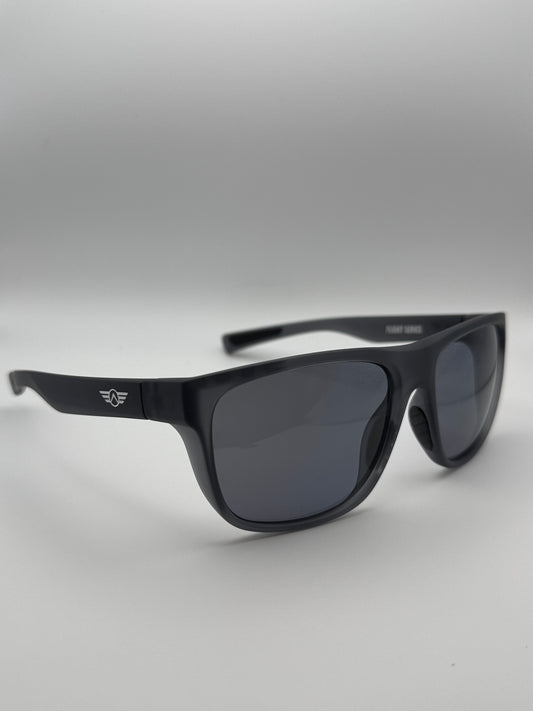
Maverick – Polarized MFD Sunglasses — $59
Best for: Most line days and brighter conditions. Coverage, Pilot Polarized, UV400, ANSI Z80.3, TR90, protective coatings.
→ Shop the Maverick -
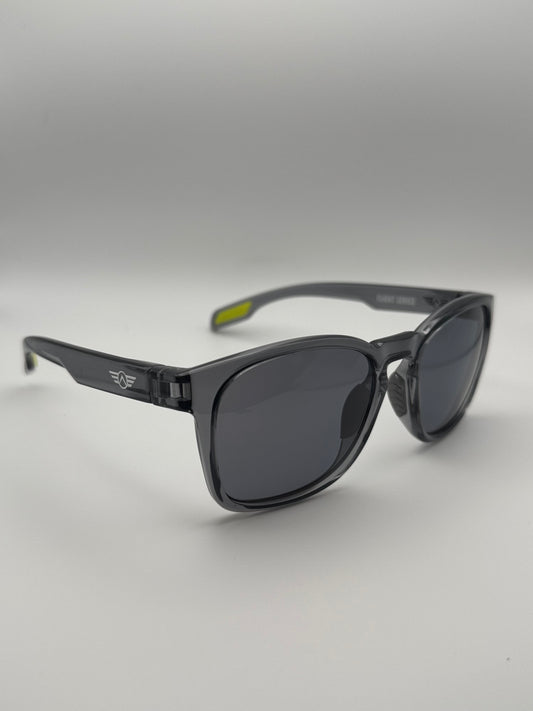
Ghost – Polarized MFD Sunglasses — $59
Best for: A lower-profile frame under a headset. Same optical stack.
→ Shop the Ghost -
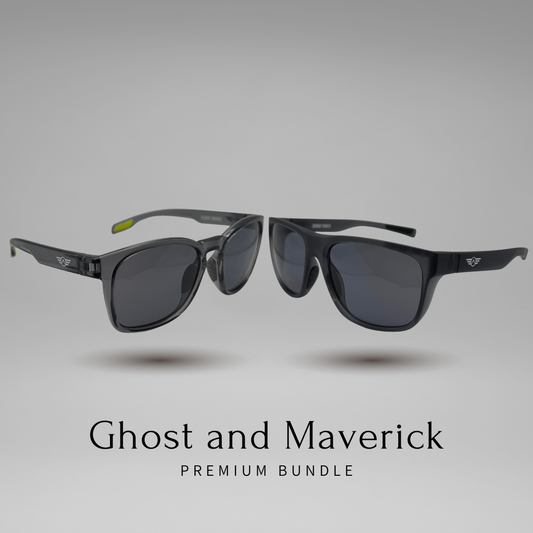
Pilot’s Pair — Maverick + Ghost Bundle — $89
Best for: One pair in the kit bag, one in the crashpad or car. Commuters should start here.
→ Get the Pilot’s Pair
Mission Series — same Pilot Polarized performance, duty-oriented build, Ri-PeX / Ri-Pix coating (scratch, smudge, moisture / Hydro Roll)
-
Alpha – ANSI Z80.3 Polarized — matte black — $89
→ Shop the Alpha -
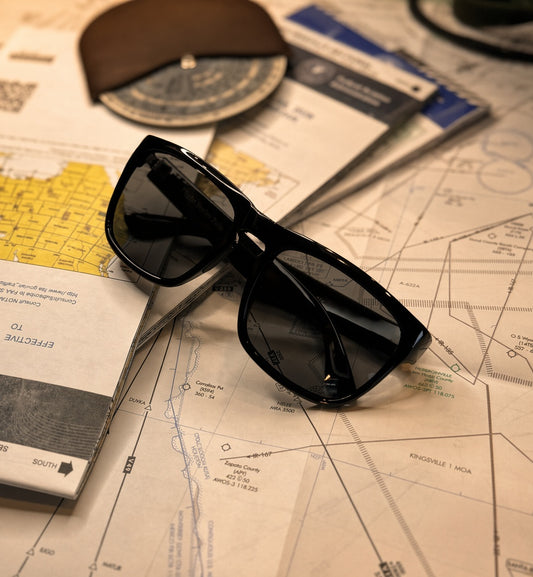
Zulu – ANSI Z80.3 Polarized — gloss black — $89
→ Shop the Zulu -
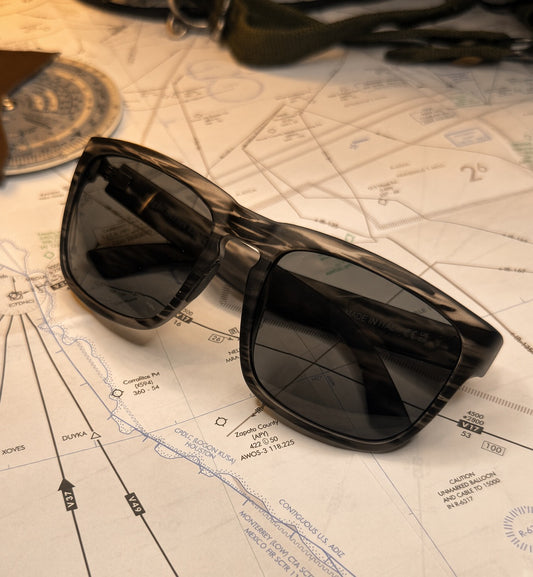
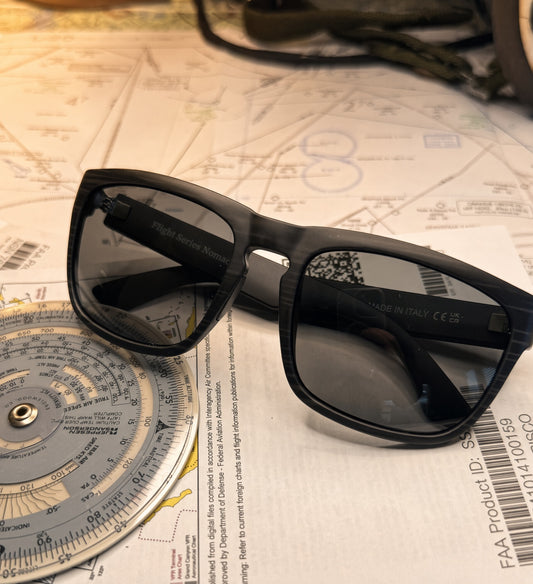
Nomad – ANSI Z80.3 Polarized — streaked — $89
→ Shop the Nomad -
Ember – ANSI Z80.3 Polarized — translucent brown/camo — $89
→ Shop the Ember
All orders ship free in the United States.
What to Skip
- Crew-room default $300 non-polarized pairs if glare is the problem you actually have
- Polarized fishing or driving sunglasses that fail the tablet test
- Photochromic lenses that stay too light behind a windshield
- Heavy metal fashion aviators that wreck the headset seal
- Anything you will not throw in a roll-aboard
How This Compares to the Usual Crew-Room Brands
Randolph, Serengeti, and similar names can be well made. A lot of glass-cockpit recommendations from those lines are non-polarized on purpose. You buy heritage and still squint.
Ray-Ban-style polarized fashion aviators go the other way. They cut glare and fight digital screens.
Flight Series sits in the gap: Pilot Polarized, UV400, ANSI Z80.3, coatings, headset-friendly TR90, $59–$89, free U.S. shipping. Built by people who fly. Priced so you can own two pairs instead of protecting one.
Commuter Reality
You leave a pair in the crashpad. You leave a pair in the car. You leave a pair in the kit bag. That is why the Pilot’s Pair exists. Two profiles. Same optics. One order. Free shipping.
If you only want one pair, buy the Maverick. If headset bulk bothers you, buy the Ghost.
Frequently Asked Questions
Will these work with airline glass panels?
Pilot Polarized is built for MFD and LCD compatibility. Not tested or verified on HUDs. Do not treat them as HUD-rated.
Are these company-issued or approved?
These are personal sunglasses that meet civilian sunglasses standards including ANSI Z80.3. Follow your airline’s uniform and PPE guidance.
Can I wear them deadheading with an iPad?
Yes. Same screen logic as an MFD. Run the rotation test on your tablet before the trip.
Why so much cheaper than Randolph?
You are not paying a heritage premium. You are paying for Pilot Polarized, UV400, impact-rated construction, and frames meant for daily use.
What is in the box?
Sunglasses, pouch, cloth, mystery patch.
Bottom Line
Airline and commuting pilots need polarized sunglasses that work with the job they actually fly: glare outside, glass inside, headset all day. Traditional polarized lenses fail the screens. $300 non-polarized pairs fail the glare.
Maverick and Ghost are $59. The Pilot’s Pair and Mission Series Alpha, Zulu, Nomad, and Ember are $89. Free U.S. shipping.
See Your Mission Clearly.
Related Reading