Best Sunglasses for Garmin G1000 and Glass-Cockpit Pilots
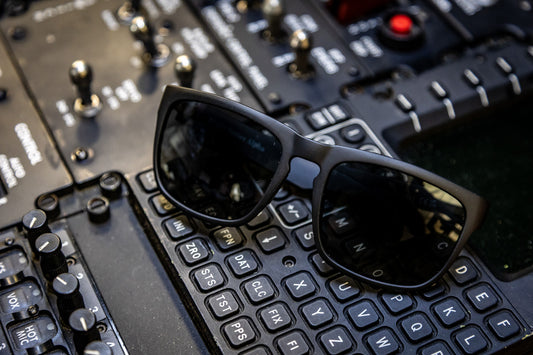
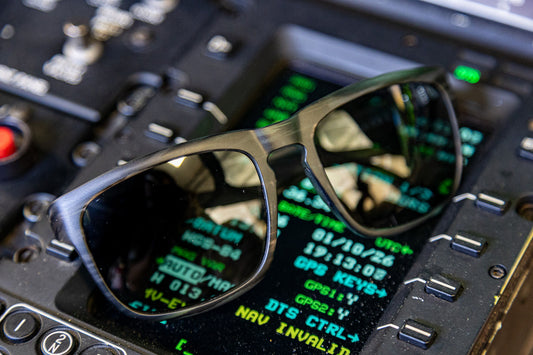
If you fly a Garmin G1000 — or any glass panel — you already know the move. You put on polarized sunglasses, glance at the MFD, and the screen goes dark, washed out, or rainbowed.
That’s not you imagining it. Traditional polarized lenses fight the same kind of light those displays use. You either live with the glare or you keep flipping the glasses up.
Flight Series was built for that exact problem. The Maverick and Ghost are $59. The Pilot’s Pair is $89. Pilot Polarized lenses, full UV400, ANSI Z80.3 certified optics and impact protection, scratch- and smudge-resistant coatings, TR90 frames, and free U.S. shipping.
Who This Is For
Private pilots, students, CFIs, and anyone flying a G1000, G3X, GTN, Avidyne, Dynon, or a mounted iPad who wants polarized sunglasses that don’t take the panel offline.
Why the G1000 Hates Regular Polarized Lenses
LCD and similar cockpit displays send light through their own polarizing filter. Regular polarized sunglasses have a filter aimed at horizontal glare — water, canopy bounce, cloud tops.
When those two filters cross at the wrong angle, the screen loses light. Sometimes it’s a little dim. Sometimes it’s a black rectangle. A slight head tilt toward the MFD is often enough.
Steam-gauge airplanes hid this. Glass cockpits don’t. The G1000 made it a everyday problem, even in trainers.
What to Look For
1. Pilot Polarized / screen-readable polarization This is the whole list, if you’re honest. Glare control that stays mostly compatible with MFDs, LCDs, and digital displays. If the brand doesn’t say it, assume traditional polarization.
2. Full UV400 Altitude raises the UV load. UV400 is the one that belongs in the airplane.
3. ANSI Z80.3 certified optics and impact protection Clear vision plus the FDA steel-ball impact test. Not optional if these live in a flight bag.
4. Scratch- and smudge-resistant coatings Kneeboards, yokes, cables, and the bottom of the bag will wreck untreated lenses.
5. Lightweight TR90 frames that work under a headset If they dig in on a two-hour cross-country, they fail.
6. A pair you can actually use A $300 heritage pair you leave in the case isn’t doing the job.
If you fly a G1000 and want the pair that keeps the screens readable, start here:
→ Maverick – Polarized MFD Sunglasses — $59 → Pilot’s Pair (Maverick + Ghost) — $89
The Lineup
Classic Series
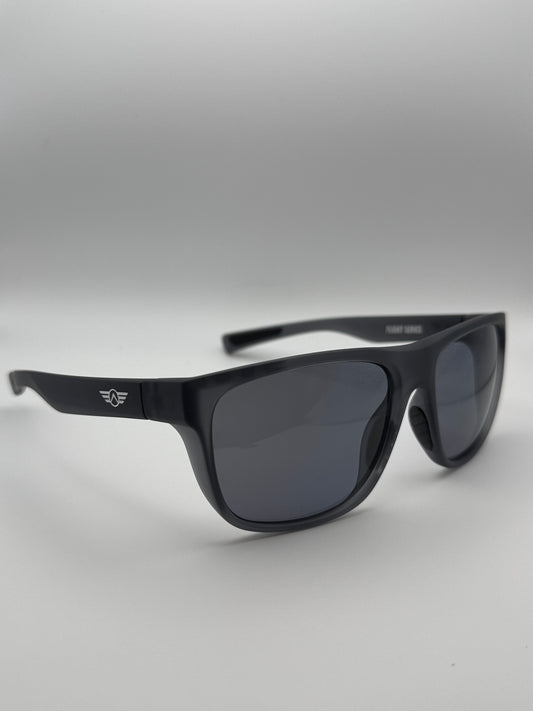
- Maverick – Polarized MFD Sunglasses — $59 Best for: Most G1000 and glass-cockpit flying. Pilot Polarized, full UV400, ANSI Z80.3, TR90, scratch- and smudge-resistant coatings. → Shop the Maverick
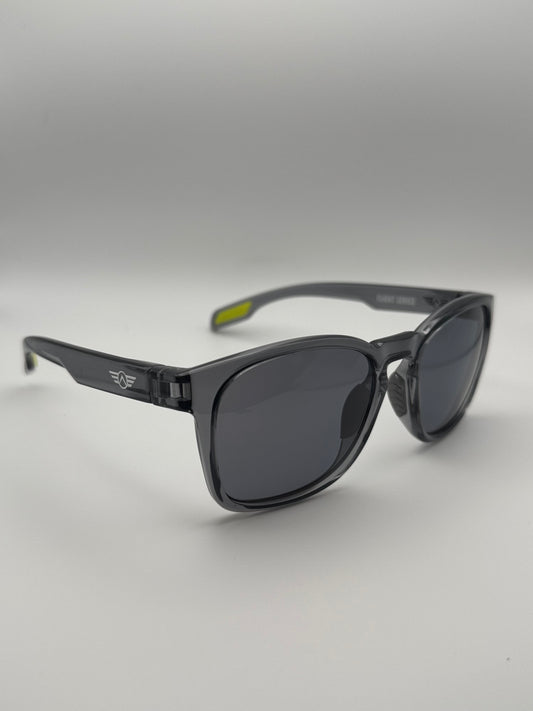
- Ghost – Polarized MFD Sunglasses — $59 Best for: A lower-profile frame with the same optics under a headset. → Shop the Ghost
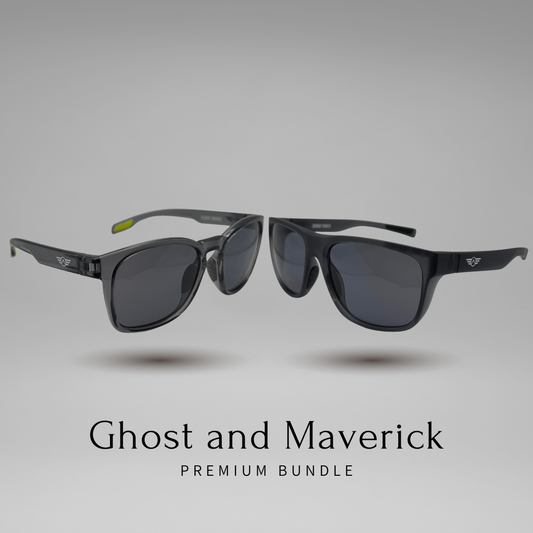
- Pilot’s Pair — Maverick + Ghost Bundle — $89 Best for: A cockpit pair and a spare in the bag. Two styles, free U.S. shipping. → Get the Pilot’s Pair
Mission Series
Same Pilot Polarized optics and coatings, with ANSI Z80.3 impact-rated construction.
- Zulu – ANSI Z80.3 Polarized — $89 → Shop the Zulu
- Ember – ANSI Z80.3 Polarized — $89 → Shop the Ember
- Alpha – ANSI Z80.3 Polarized — $89 → Shop the Alpha
- Nomad – ANSI Z80.3 Polarized — $89 → Shop the Nomad
All orders ship free in the United States.
The 30-Second Test
Hold the sunglasses up to your phone, iPad, or a laptop screen and rotate them. If the display goes dark, that’s what the G1000 is going to do. Most sporting-goods polarized pairs fail this. A lot of $280–$350 “aviation” pairs fail it too — or they skip polarization entirely so they don’t have to deal with it.
What to Skip
- Regular polarized fishing or driving sunglasses
- Fashion aviators with no UV400 and no impact rating
- Heavy metal frames that wreck the headset seal
- Non-polarized heritage pairs that leave you squinting on a bright VFR day
Bottom Line
If you fly a Garmin G1000, polarized sunglasses only belong in the cockpit if they stay readable on the MFD. Pilot Polarized was built for that — glare off the canopy, UV at altitude, and screens that stay up.
The Maverick and Ghost start at $59. The Pilot’s Pair and Mission Series Zulu, Ember, Alpha, and Nomad are $89. Free U.S. shipping.
See outside. See the panel. Stop flipping the glasses up.
Related Reading