The Invisible Threat: How the Sun Damages Your Eyes (And What Pilots Can Do About It)
When you look up at the sky, the sun feels like pure energy. For pilots it also delivers an invisible load of ultraviolet radiation that most people never think about until the damage is already done.
You wouldn’t spend a day outside without sunscreen on your skin. Yet many pilots still fly with sunglasses that offer incomplete UV protection or force them to choose between glare reduction and readable instruments. That tradeoff is unnecessary.
Who This Is For
This is written for pilots, aircrew, and anyone who spends serious time at altitude or in bright reflective environments and wants to protect their long-term vision without compromising cockpit performance.
Understanding the Threat: UVA and UVB
The sun emits ultraviolet radiation in three bands. UVC is blocked by the atmosphere. The two that reach us are:
- UVB — mostly absorbed by the cornea and lens. Responsible for photokeratitis (sunburn of the eye) and a major contributor to cataracts.
- UVA — penetrates deeper, reaching the retina. Linked to long-term damage including macular degeneration.
At altitude the atmosphere is thinner. UV intensity increases roughly 4–5% for every 1,000 feet of elevation. Flying above the clouds adds intense reflection off the cloud tops. The exposure is significantly higher than what most ground-level sunglasses were designed for.
The damage is cumulative. Every unprotected hour adds up over a flying career.
Short-Term Damage: Photokeratitis
Photokeratitis is essentially a sunburn on the cornea. It often appears hours after intense exposure and can include:
- Sharp pain and redness
- Gritty sensation
- Extreme light sensitivity
- Temporary blurred vision
For a pilot, even a mild case is more than uncomfortable — it can take you out of the seat. Environments with high reflectivity (clouds, snow, water, white sand) raise the risk dramatically.
Long-Term Damage: The Slow Losses
Cataracts Chronic UVB exposure causes proteins in the lens to clump and cloud. Vision becomes blurred, contrast drops, and glare sensitivity increases. A significant percentage of cataracts are linked to UV overexposure.
Macular Degeneration UVA rays that reach the retina can contribute to damage of the macula — the area responsible for sharp central vision. This is one of the leading causes of vision loss later in life. UV protection is one of the few practical steps that can help reduce risk.
Pterygium and Eyelid Skin Cancer Growths on the conjunctiva and skin cancers around the thin eyelid skin are strongly associated with chronic UV exposure. Pilots and people who spend years outdoors see these conditions more frequently.
The Cockpit Problem Most Sunglasses Still Ignore
Many pilots reach for polarized sunglasses to cut glare. Traditional polarization works by blocking horizontal light waves. The problem is that modern MFDs and LCD displays also use polarized light. When the two filters conflict, the screens can black out, rainbow, or become unreadable at certain head angles.
This forces an ugly choice: suffer the glare with non-polarized lenses, or risk losing clear view of your instruments with traditional polarized ones. Most $280–$350 name-brand aviation sunglasses still leave you in that tradeoff.
The Better Standard
You need three things at once:
- Full UV400 protection (non-negotiable at altitude)
- Polarization that reduces real-world glare
- Compatibility with MFDs and digital cockpit displays
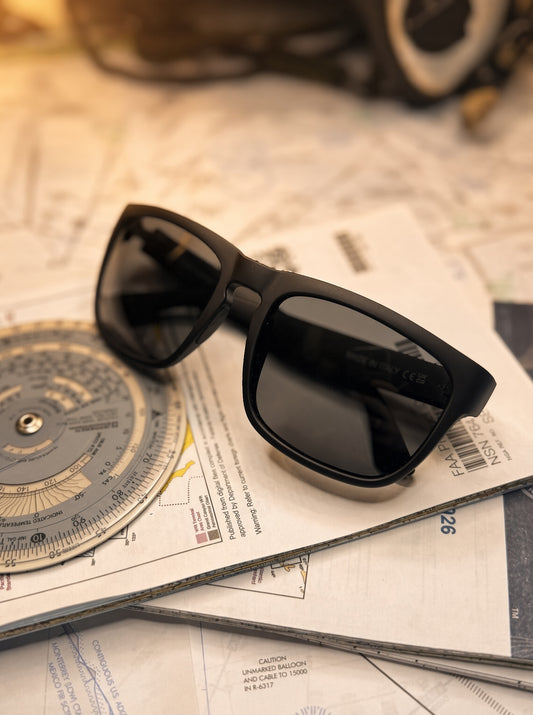
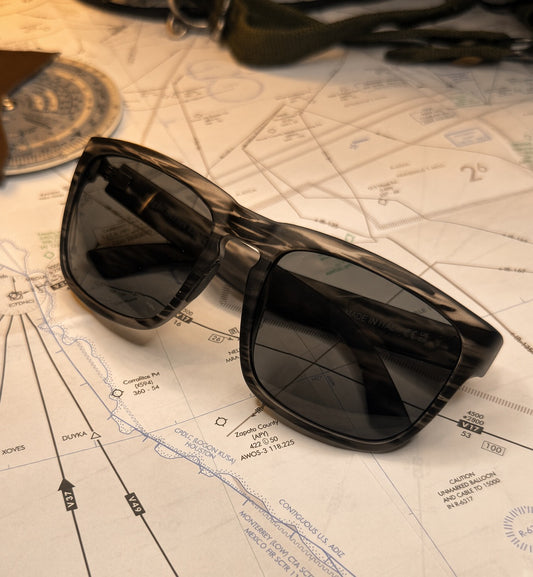
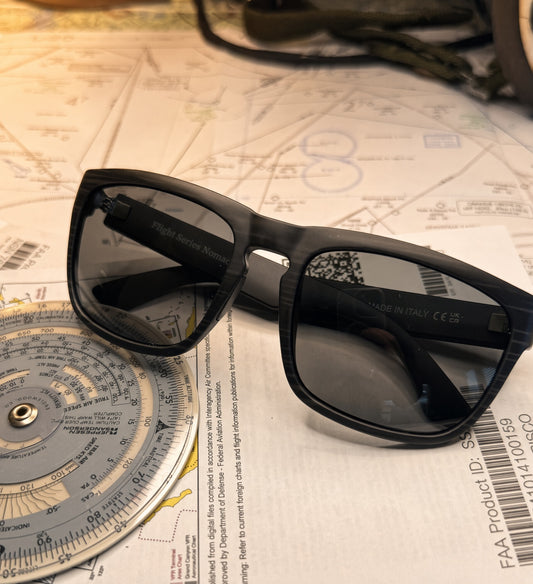
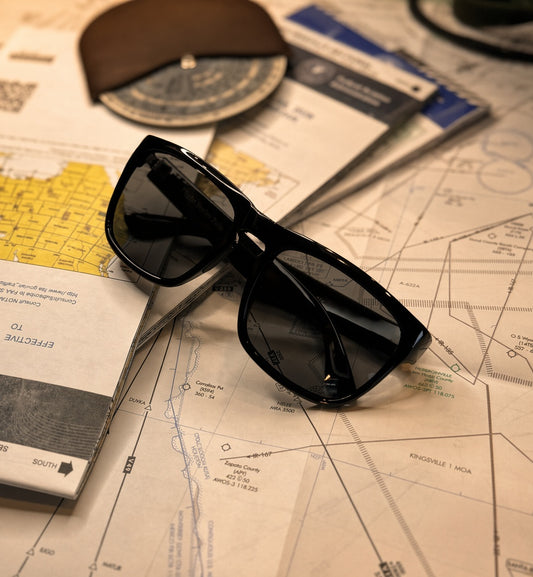
Flight Series Pilot Polarized lenses were engineered for exactly this combination. The polarization is calibrated to cut environmental glare while remaining mostly compatible with multi-function displays and digital screens. Every pair also delivers full UV400 protection, scratch- and smudge-resistant coatings, lightweight TR90 frames, and ANSI Z80.3 impact performance.
If you want the pair that delivers UV400 + glare reduction + screen compatibility right now, start here:
→ Maverick – Polarized MFD Sunglasses — $59 → Pilot’s Pair (Maverick + Ghost) — $89 (best value)
Full Current Options
Signature Series
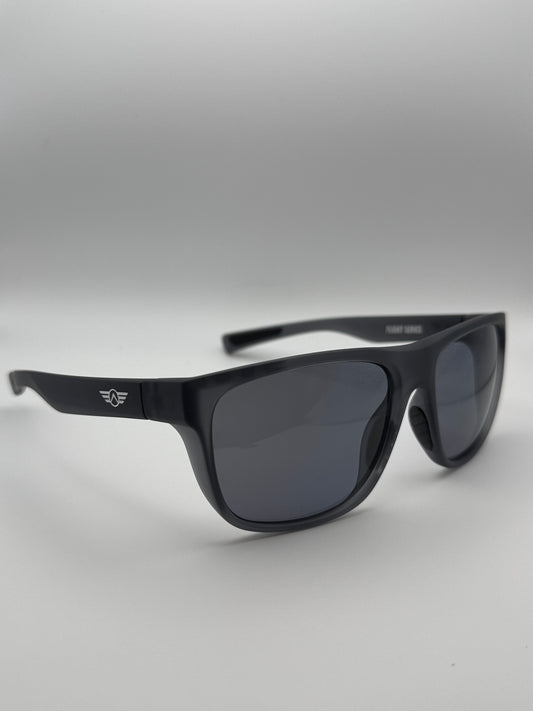
- Maverick – Polarized MFD Sunglasses — $59 Full UV400, Pilot Polarized (MFD-compatible), scratch & smudge resistance, TR90 frame. → Shop the Maverick
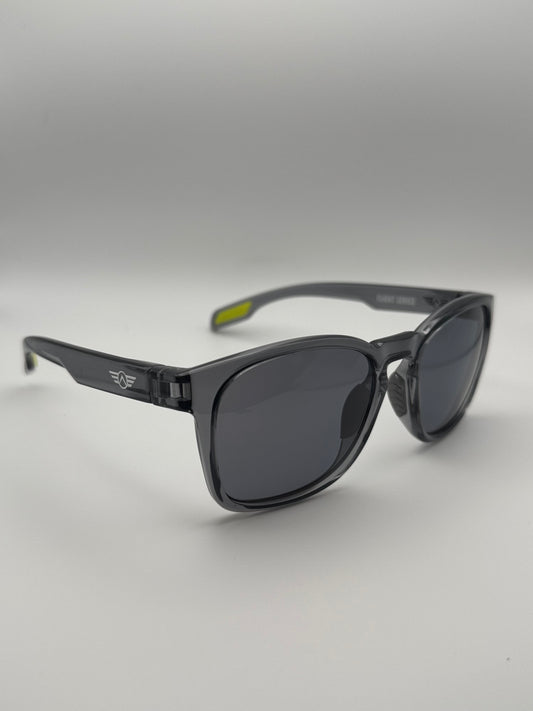
- Ghost – Polarized MFD Sunglasses — $59 Same protection and optics in a cleaner, lower-profile design. → Shop the Ghost
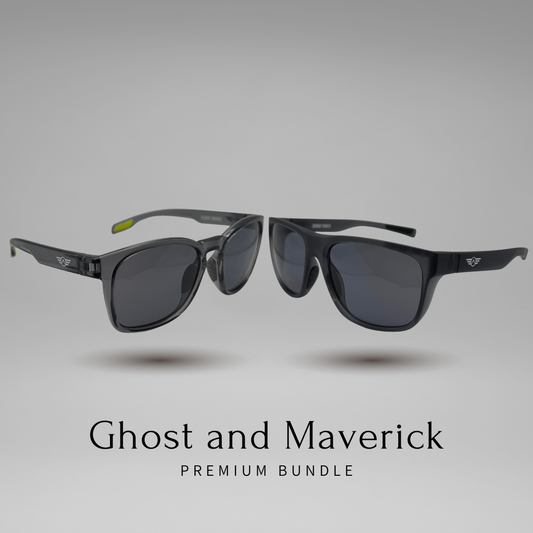
- Pilot’s Pair — Maverick + Ghost Bundle — $89 Both styles, free U.S. shipping, better value than buying separately. → Get the Pilot’s Pair
Flight Line Series (ANSI Z80.3)
- Zulu – ANSI Z80.3 Polarized — $89 → Shop the Zulu
- Ember – ANSI Z80.3 Polarized — $89 → Shop the Ember
- Alpha – ANSI Z80.3 Polarized — $89 → Shop the Alpha
- Nomad – ANSI Z80.3 Polarized — $89 → Shop the Nomad
All orders ship free in the United States.
Why This Beats Most Expensive Alternatives
High-end heritage brands often deliver excellent optical quality and solid UV protection. What they rarely deliver is polarization that works cleanly with modern glass cockpits at a price that encourages daily use. At $280–$350 many pilots treat the pair carefully instead of using it hard.
Flight Series puts the critical combination — UV400 + Pilot Polarized + durable coatings + impact performance — at $59–$89 with free shipping. You get the protection your eyes need and the cockpit compatibility your instruments require, without the financial hesitation.
Bottom Line
UV damage is real, cumulative, and largely preventable. At altitude the exposure is higher. Traditional polarized sunglasses force a choice between glare control and readable displays. That choice is no longer necessary.
Full UV400 protection, Pilot Polarized lenses that stay compatible with MFDs, solid build quality, and free U.S. shipping give you the complete package at a price that makes sense for working gear.
The Maverick and Ghost start at $59. The Pilot’s Pair and the ANSI-rated Flight Line models are $89.
Protect the eyes that get you home.
Related Reading