UV Protection vs Polarization in Sunglasses: Best Recommended Pilot Sunglasses
For pilots the answer is sharper than for most people. UV is worse at altitude. Glare is real. And digital screens are now part of the panel. Get polarization wrong and you trade one problem for another.
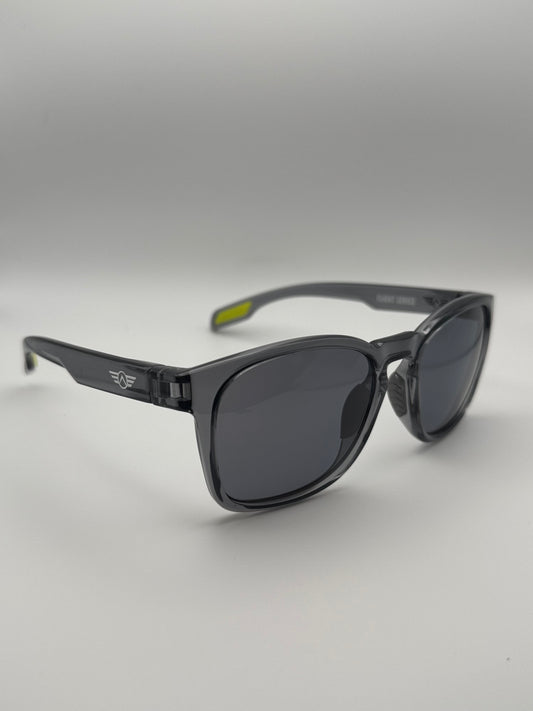
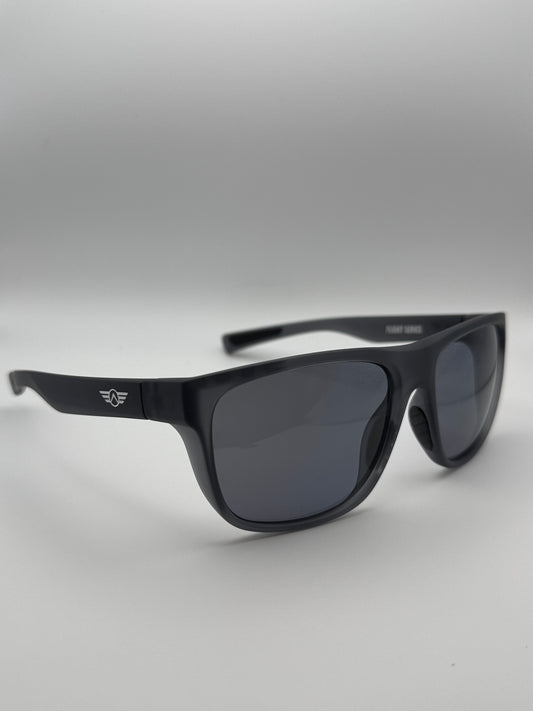
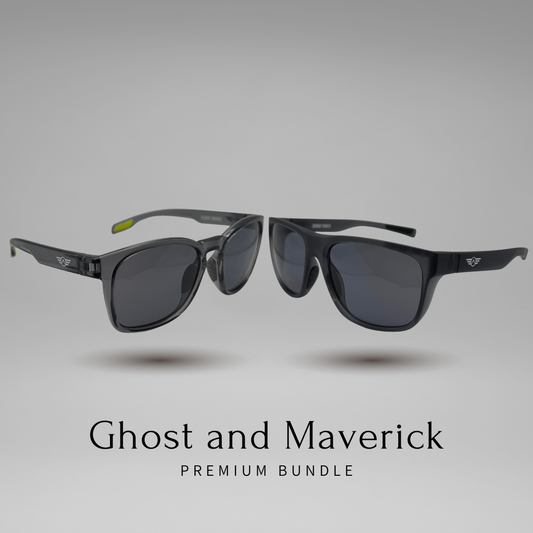
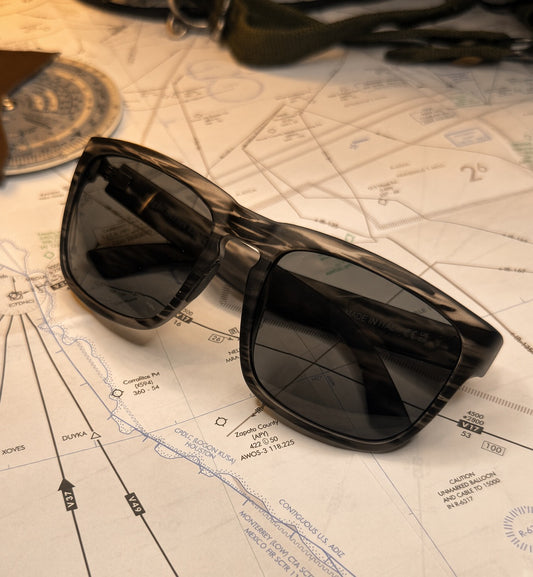
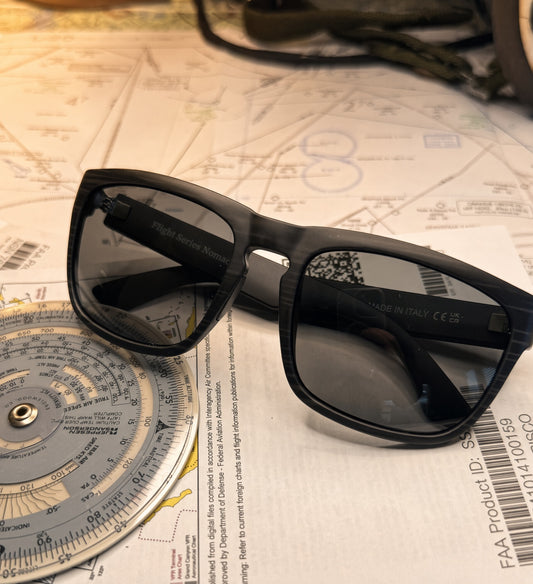
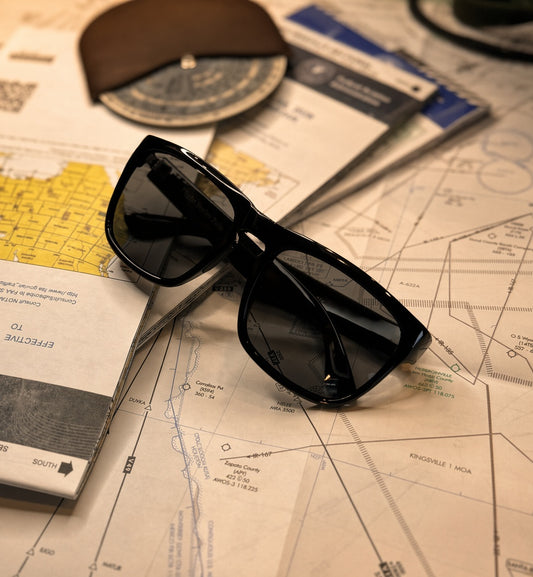
Flight Series was built by military aviators for that exact tradeoff. The Maverick and Ghost are $59. The Pilot’s Pair is $89. Pilot Polarized lenses, full UV400, ANSI Z80.3 impact-rated construction, scratch- and smudge-resistant coatings, TR90 frames, and free U.S. shipping. Veteran-owned. Not tested or verified on HUDs.
Who This Is For
Pilots, aircrew, students, and CFIs who want a clear answer on UV versus polarization — and a pair that works with MFDs, LCDs, and tablets instead of against them.
UV Protection: The Non-Negotiable
If you only remember one thing about sunglasses, make it this: UV protection is not optional.
Ultraviolet radiation is invisible and cumulative. Long-term exposure raises risk of cataracts, macular degeneration, and growths on the eye. Short, intense exposure — common at altitude, on the water, or in bright snow — can cause photokeratitis, essentially a sunburn on the cornea.
At altitude the atmosphere is thinner. UV intensity rises with elevation. Flying above reflective cloud tops adds more load. Ground-level fashion sunglasses were not designed for that environment.
What to look for:
- Lenses labeled UV400 or 100% UVA/UVB protection
- Do not rely on how dark the lens looks — tint and UV protection are independent
- Any pair that does not clearly state UV protection should be avoided
A dark lens with no UV coating can be worse than a clear lens. Your pupils open in the shade and take in more unprotected UV. Every pair you own should meet the UV400 baseline. There is no debate.
Polarization: Useful Until It Meets a Digital Screen
Polarization is the next feature most people hear about. Polarized lenses filter horizontal light waves that create glare off water, roads, glass, canopies, and other reflective surfaces. The result is reduced eye strain, better contrast, and clearer vision in many outdoor conditions.
For fishing, driving, or bright outdoor days, traditional polarization works well.
The problem appears the moment you look at a digital display. Modern MFDs, LCD instrument panels, GPS units, EFBs, and phones emit polarized light. When a traditional polarized lens crosses that light at the wrong angle, you get blackout, rainbow distortion, or washed-out screens.
For pilots this is a safety issue. Losing a clear view of multi-function displays because of your sunglasses is unacceptable. The same problem hits anyone who relies on digital devices outdoors — first responders with MDTs, anglers with fish finders, pilots with ForeFlight on an iPad.
This is why so many aviation guides still recommend non-polarized sunglasses for glass cockpits. That advice protects the displays. It also leaves pilots without effective glare reduction when they need it most.
The Better Approach: Screen-Compatible Polarization
The real solution is not to abandon polarization. It is to use polarization calibrated to reduce glare while remaining mostly compatible with MFDs and digital cockpit displays.
That is what Flight Series calls Pilot Polarized lenses. You get meaningful glare reduction without the blackout risk that comes with ordinary polarized sunglasses.
Combined with full UV400 protection, scratch- and smudge-resistant coatings, lightweight TR90 frames, and ANSI Z80.3 impact performance, the package becomes practical for actual flying — not just ramp photos.
Decision Criteria for 2026
1. UV400 — always
No label, no buy.
2. Pilot Polarized / MFD-LCD compatible
If the brand only says “polarized,” assume traditional polarization and test it on your phone or iPad before you trust it in the airplane.
3. ANSI Z80.3 impact rating
Named standard. FDA steel-ball drop from 50 inches. Not “shatterproof” marketing.
4. Scratch- and smudge-resistant coatings
Flight bags and fingerprints will find untreated lenses.
5. TR90 frames under a headset
Long duty days punish heavy metal fashion frames.
6. Honest price for daily use
A $300 pair you protect in a case is not working gear.
If this is your list, start here:
→ Maverick – Polarized MFD Sunglasses — $59
→ Pilot’s Pair (Maverick + Ghost) — $89
Pouch, cloth, and a mystery patch in the box. Free U.S. shipping.
Full Lineup
Classic Series — everyday cockpit and daily wear
-
Maverick — $59
Best for: Most glass-cockpit and VFR days.
Pilot Polarized, UV400, ANSI Z80.3, TR90, protective coatings.
→ Shop the Maverick -
Ghost — $59
Best for: Lower-profile under the headset. Same optical stack.
→ Shop the Ghost -
Pilot’s Pair — $89
Best for: Primary plus backup.
→ Get the Pilot’s Pair
Mission Series — same Pilot Polarized performance, duty-oriented build, Ri-PeX / Ri-Pix coating
-
Alpha (matte black) — $89
→ Shop the Alpha -
Zulu (gloss black) — $89
→ Shop the Zulu -
Nomad (streaked) — $89
→ Shop the Nomad -
Ember (translucent brown/camo) — $89
→ Shop the Ember
All orders ship free in the United States.
How This Compares to Typical Name Brands
Many $280–$350 “aviation” sunglasses offer solid UV protection and good optical quality. Most either skip polarization or use traditional polarization that conflicts with glass-cockpit displays. You pay a premium and still choose between glare control and readable instruments.
Flight Series was built to reduce that tradeoff. Pilot Polarized + UV400 + protective coatings + ANSI Z80.3 + free shipping at $59–$89 makes the functional choice the practical one.
Quick Test Before You Buy Anything Else
Hold the sunglasses up to your phone, iPad, or a laptop screen and slowly rotate them. If the display goes dark or heavily distorted, that is what your MFD will do. Most sporting-goods polarized pairs fail this. A lot of expensive “aviation” pairs avoid the test by shipping non-polarized.
Frequently Asked Questions
Is UV400 the same as polarization?
No. UV blocking and polarization are separate. You need both for cockpit use — UV400 always, polarization only if it stays screen-compatible.
Do darker lenses mean more UV protection?
No. Tint controls visible light. UV coating controls ultraviolet. Always read the label.
Can I wear these with a G1000 or ForeFlight?
Pilot Polarized is built for MFD/LCD compatibility. Not tested or verified on HUDs.
Why do aviation articles say avoid polarized sunglasses?
Because traditional polarization conflicts with digital displays. Screen-compatible polarization is the updated answer.
Which pair should I start with?
Maverick for most flying. Ghost for a lower profile. Pilot’s Pair if you want a spare in the bag.
Bottom Line
UV protection is mandatory for everyone. Traditional polarization is useful until it meets a digital screen — then it becomes a liability in a glass cockpit.
The better standard is clear: full UV400 plus polarization that stays compatible with MFDs and digital displays. Add impact rating, protective coatings, and headset-friendly frames, and you have working gear.
The Maverick and Ghost start at $59. The Pilot’s Pair and Mission Series models are $89. Free U.S. shipping.
Built for the way pilots actually fly. Priced so you can use them every day.
See Your Mission Clearly.
Related Reading