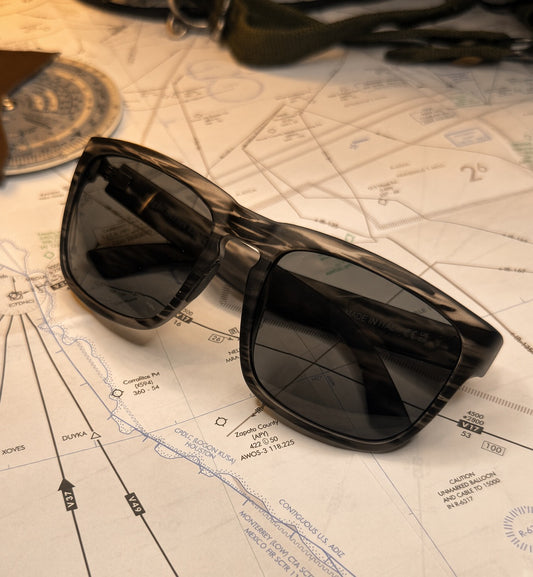
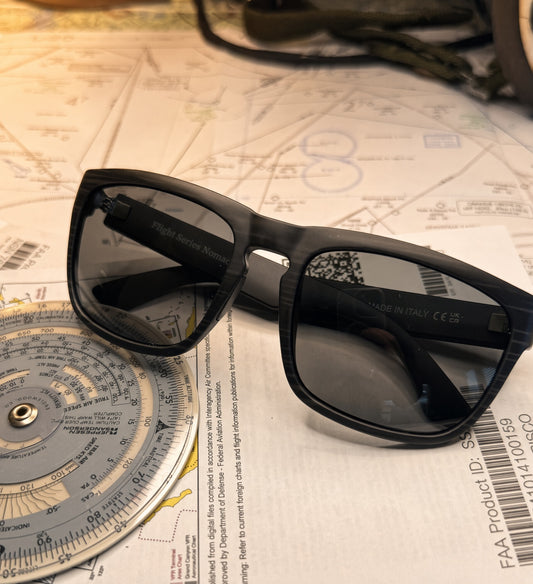
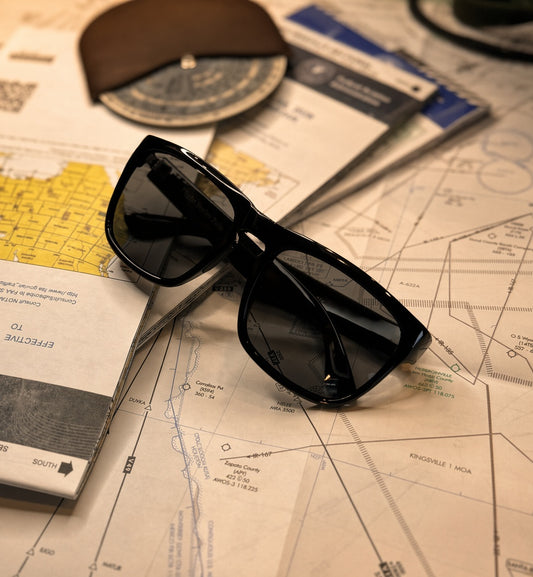
Why Scratch and Smudge Resistance Matter in Pilot Sunglasses
When you buy a pair of sunglasses, you expect them to last. Too often the lenses are scratched after a few weeks or filmed over with smudges that kill clarity. For pilots, tactical users, and anyone who relies on their gear every day, that is more than an annoyance. It is a performance problem.
Most sunglasses are designed fashion-first. They look fine in the store. Wipe them on a shirt, toss them in a flight bag, deal with sweat and fingerprints, and the surface starts to haze. Contrast drops. In a cockpit, that is the last thing you need.
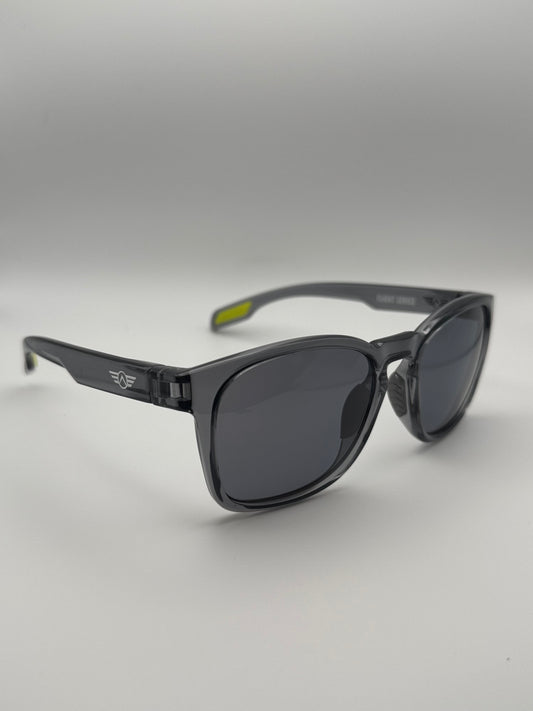
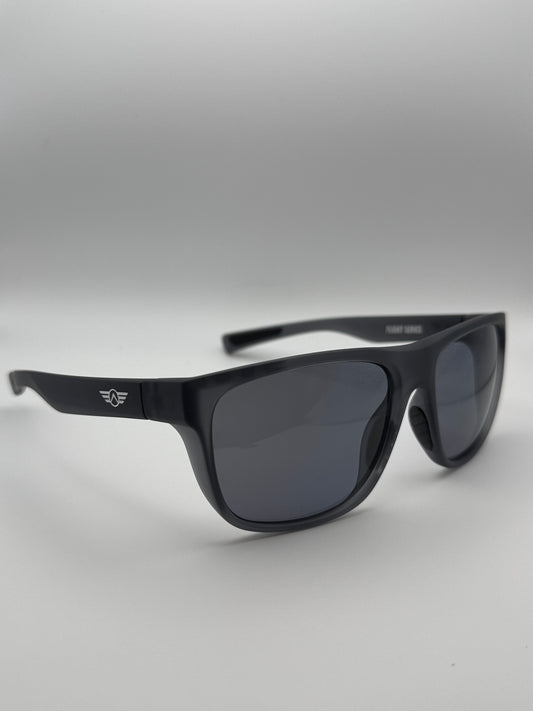
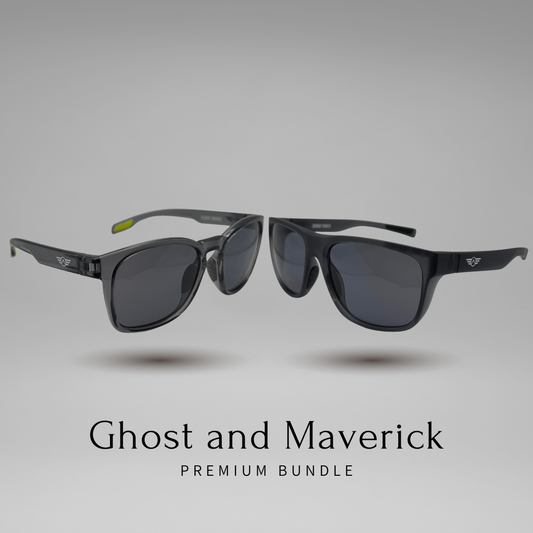
Flight Series was built by military aviators who got tired of lenses that failed under real use. The Maverick and Ghost are $59. The Pilot’s Pair is $89. Every pair includes advanced scratch-resistant and smudge-resistant (hydrophobic/oleophobic) coatings, Pilot Polarized lenses, full UV400, ANSI Z80.3 impact-rated construction, TR90 frames, and free U.S. shipping. Veteran-owned. Not tested or verified on HUDs.
Who This Is For
Pilots, aircrew, CFIs, and field users who put sunglasses through daily abuse and need the lenses to stay clear without constant babysitting.
The Real Cost of Fragile Lenses
A scratched lens does not just look worn. Small abrasions scatter light, reduce contrast, and create extra glare. That affects traffic scan, instrument reading, and visual awareness. Smudges from fingerprints, sweat, sunscreen, or dust do the same thing. You wipe. You smear. You wipe again. If the surface is not protected, cleaning makes it worse.
In aviation, every second spent fighting your sunglasses is a second you are not fully in the scan. Over a training day or a long cross-country, cheap coatings turn into a distraction. Over months, the pair becomes a liability you keep using because replacing a $300 heritage frame feels painful.
Clarity is not a luxury feature. It is the whole point of the glasses.
Why Scratch Resistance Is Non-Negotiable
Performance eyewear needs a hardened surface that handles abrasion. Regular plastic lenses scratch from cleaning, gear contact, kneeboards, headset cables, and life in a bag. Once the surface is compromised, optical quality declines and stays that way. You cannot polish a deep scratch out of a sunglass lens on the ramp.
Proper scratch-resistant coatings create a tougher outer layer. You can wipe the lenses, wear them hard, and put them through normal daily abuse without the surface degrading as fast. That is the difference between sunglasses built for work and pairs that only look good for a season.
Scratch resistance does not mean indestructible. It means the lens was designed to survive the way pilots actually treat gear.
Smudge Resistance: Keeping Vision Clear
Smudges are the other constant enemy. Untreated lenses attract oils, sweat, and dust. In a cockpit or during long outdoor days, the lenses film over fast.
Hydrophobic and oleophobic coatings address this at the surface level. They help repel water, oils, and dirt so moisture and grease bead and clean off instead of smearing into a haze. Cleaning gets faster. Streaks drop. You spend less time maintaining the pair and more time using it.
For anyone who cannot afford reduced clarity mid-task, this is basic performance — not an upsell.
Mission Series pairs add Ri-PeX / Ri-Pix coating (scratch, smudge, moisture / Hydro Roll) on top of the same Pilot Polarized optical stack. Classic Series already includes strong protective coatings as standard. Both are built for daily use, not display-case storage.
Decision Criteria
1. Real scratch-resistant coating
Not “hard coated” as empty marketing. A surface that survives wiping and bag life.
2. Hydrophobic / oleophobic smudge resistance
Oils and sweat should not own the lens by lunchtime.
3. Pilot Polarized / MFD-LCD compatible
Clear coatings on lenses that black out the panel still fail the cockpit test.
4. Full UV400
Altitude raises UV load.
5. ANSI Z80.3 impact rating
5/8” steel ball from 50 inches. Named standard, not “durable.”
6. TR90 frames under a headset
Light, flexible, built for hours.
7. Price that allows hard use
If you are afraid to throw them in the bag, they are the wrong tool.
If this is your list, start here:
→ Maverick – Polarized MFD Sunglasses — $59
→ Pilot’s Pair (Maverick + Ghost) — $89
Pouch, cloth, and a mystery patch in the box. Free U.S. shipping.
Full Lineup
Classic Series — everyday cockpit and daily wear
-
Maverick — $59
Best for: Most flying days.
Pilot Polarized, UV400, ANSI Z80.3, TR90, scratch- and smudge-resistant coatings.
→ Shop the Maverick -
Ghost — $59
Best for: Lower-profile under the headset. Same coating and optical stack.
→ Shop the Ghost -
Pilot’s Pair — $89
Best for: Primary plus backup so one scratched bag pair does not end your week.
→ Get the Pilot’s Pair
Mission Series — same Pilot Polarized performance, duty-oriented build, Ri-PeX / Ri-Pix coating
-
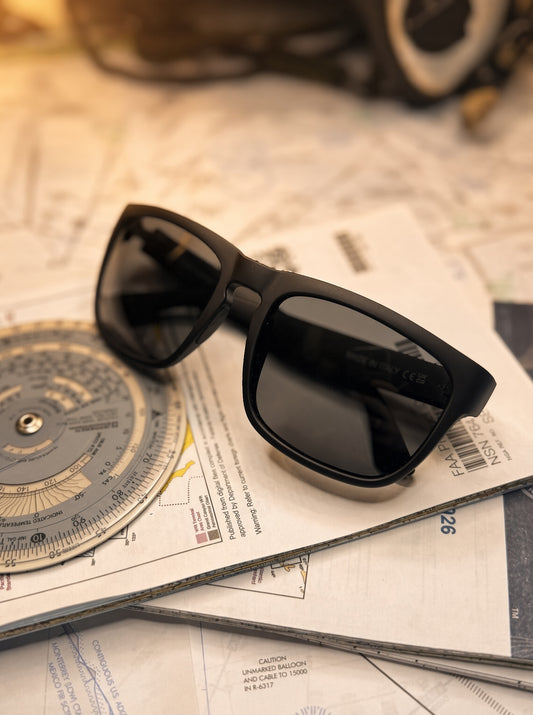
Alpha (matte black) — $89
→ Shop the Alpha -
Zulu (gloss black) — $89
→ Shop the Zulu -
Nomad (streaked) — $89
→ Shop the Nomad -
Ember (translucent brown/camo) — $89
→ Shop the Ember
All orders ship free in the United States.
How This Compares to Typical Name Brands
Most $280–$350 “aviation” sunglasses sell heritage, metal, and style. Optical quality can be good. Advanced hydrophobic/oleophobic treatments and honest daily-use durability are often thinner than the price suggests. At those numbers you also tend to baby the pair instead of using it hard.
Flight Series puts protective coatings, Pilot Polarized performance, ANSI Z80.3, and TR90 frames at $59–$89 with free shipping. You get the durability features that matter in a flight bag without the markup that does not improve cockpit clarity.
Care That Actually Helps
Coatings last longer if you do not destroy them on purpose:
- Use a microfiber cloth, not a t-shirt
- Rinse grit off before wiping when you can
- Avoid paper towels and harsh chemicals
- Store in the pouch when they are not on your face
Even good coatings wear over time. That is normal. The point is starting with a surface built for abuse, not a naked lens that fails in a month.
Frequently Asked Questions
Do all Flight Series pairs include scratch and smudge resistance?
Yes. Protective coatings are part of the standard build. Mission Series adds the Ri-PeX / Ri-Pix package for scratch, smudge, and moisture resistance.
Will these still work with a G1000 or iPad?
Pilot Polarized lenses are built to cut glare while remaining mostly compatible with MFDs, LCDs, and digital displays. Not tested or verified on HUDs.
How is this different from cheap “scratch-resistant” gas-station sunglasses?
Cheap pairs use thin claims and soft substrates. Flight Series pairs the coatings with Pilot Polarized optics, UV400, ANSI Z80.3 impact rating, and frames meant for headset wear.
Should I buy the Pilot’s Pair?
If you instruct, travel, or leave gear in multiple aircraft, yes. One pair in use, one clean backup beats flying on a hazed lens.
Bottom Line
Sunglasses should not feel disposable. They need to protect your eyes, hold optical clarity, and survive the way pilots actually treat gear. Scratch resistance, smudge-repelling coatings, Pilot Polarized lenses, UV400, and ANSI Z80.3 deliver that at a price built for daily use.
The Maverick and Ghost start at $59. The Pilot’s Pair and Mission Series Zulu, Ember, Alpha, and Nomad are $89. Free U.S. shipping.
Built to stay clear. Priced to be used.
See Your Mission Clearly.
Related Reading