Best Lens Tint for Pilots in 2026: Gray, Brown, or Mirrored?
Most pilots shop the frame first. Tint is what you stare through for three hours.
Gray keeps color honest. Brown or amber punches contrast. Mirror is a coating on top of a tint, not a different kind of polarization. None of that replaces UV400, and none of it fixes a traditional polarized lens that blacks out an MFD.
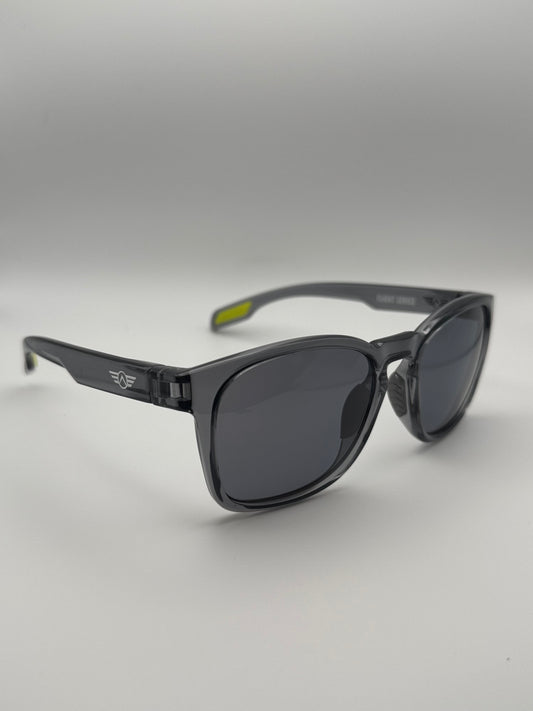
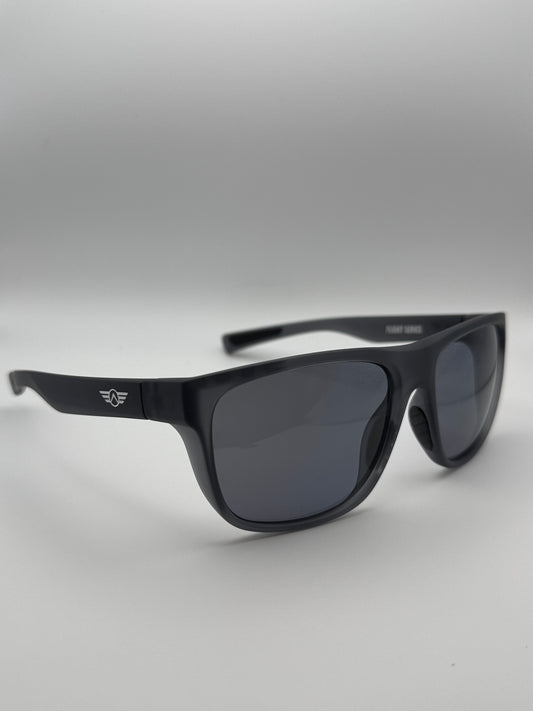
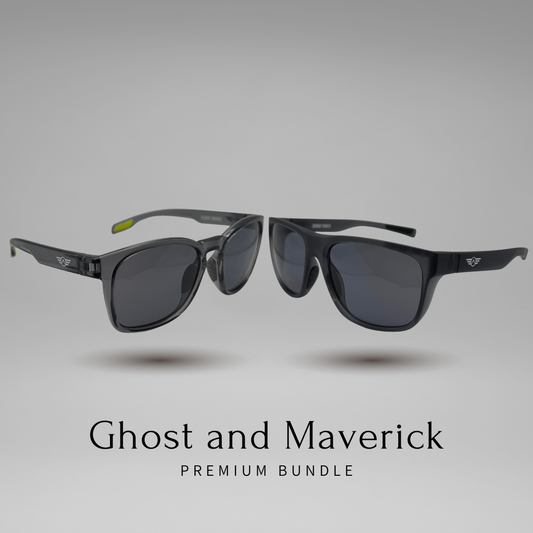
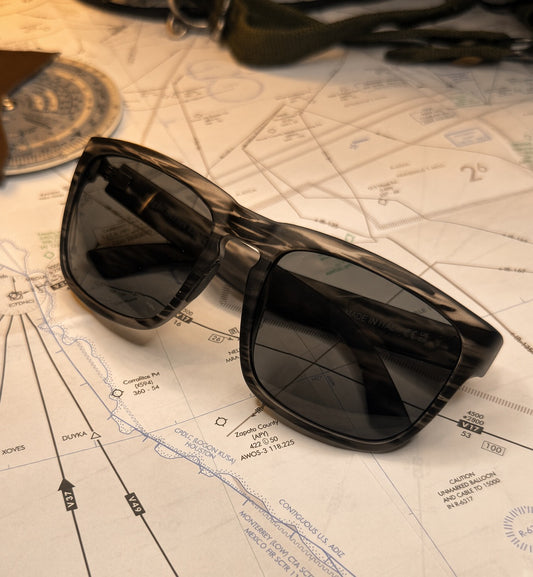
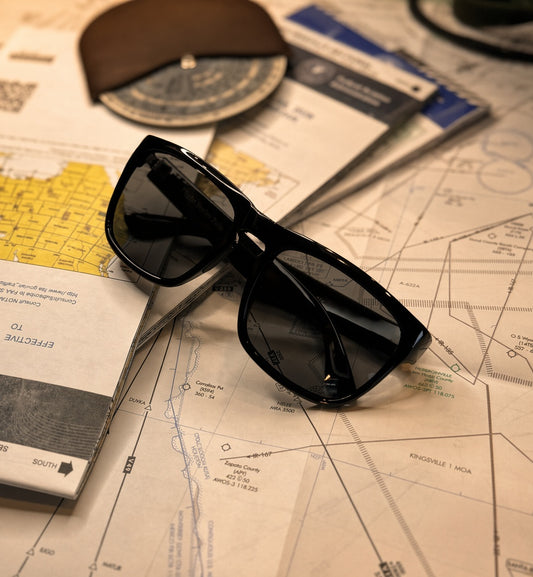
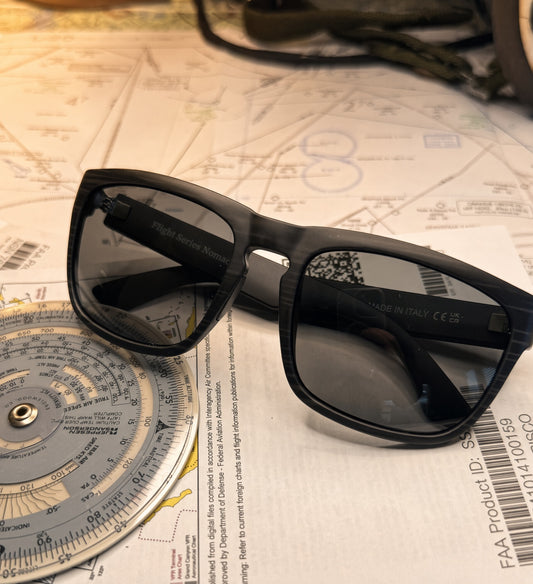
Flight Series was built by military aviators for the glare-plus-screens problem. Veteran-owned. The Maverick and Ghost are $59. The Pilot’s Pair is $89. Pilot Polarized, UV400, ANSI Z80.3, TR90 frames, free U.S. shipping. Not tested or verified on HUDs. “Compatible” means many MFDs and LCDs stay usable — not 100% undimmed at every angle.
Who This Is For
Private pilots, students, CFIs, and anyone stuck between a gray “aviation” pair and a brown driving pair.
Tint vs UV vs Polarization
Three different things:
- Tint controls how much visible light gets through and how colors look
- UV400 blocks ultraviolet. A light lens can have it. A dark lens can lack it
- Polarization cuts reflected glare. Traditional polarization can dim digital displays
Buy UV400 every time. Then pick tint for the kind of days you fly. Then pick polarization that does not take the panel offline. More on UV: Why UV protection matters in sunglasses. More on screens: MFD-Compatible Sunglasses for Pilots.
Gray
Gray is the default aviation recommendation because it does not shift color as hard. Traffic lights, nav lights, charts, and display colors stay closer to true. Good all-around tint for mixed VFR and glass-cockpit work.
Brown / amber
More contrast in haze, over water, and on dull days. Some pilots prefer it for spotting terrain. It can warm the scene. If you rely on fine color cues, test it on your own panel.
Mirrored
A surface coating. It can cut some extra brightness. It does not replace UV or Pilot Polarized. A mirrored lens can still fail an MFD if the polarization underneath is traditional.
What to Demand
1. UV400 — non-negotiable
2. Pilot Polarized / MFD-LCD compatible — test on your iPad and rotate
3. ANSI Z80.3 — sunglasses impact standard, not ballistic
4. TR90 under a headset
5. Coatings — scratch-resistant is not scratch-proof
Start here:
→ Maverick — $59
→ Pilot’s Pair — $89
Pouch, cloth, mystery patch. Free U.S. shipping.
The Lineup
Classic Series
-
Maverick — $59
→ Shop the Maverick -
Ghost — $59
→ Shop the Ghost -
Pilot’s Pair — $89
→ Get the Pilot’s Pair
Mission Series
What to Skip
- Dark fashion lenses with no UV400 callout
- Traditional polarized brown driving sunglasses
- Photochromics that stay light behind a windshield
- $300 non-polarized gray pairs if glare is why you are shopping
Glass-cockpit detail: Best Sunglasses for Garmin G1000 and Glass-Cockpit Pilots.
Students: The Best Sunglasses for New Pilots.
Frequently Asked Questions
Does darker mean safer?
No. UV coating and polarization are separate from how dark it looks.
Will these stay perfectly clear on every MFD?
No. Compatible means usable with many digital displays. Dimming can still happen at angles.
Gray or brown if I only buy one pair?
Most pilots do well with a neutral everyday pair. Get the Pilot’s Pair if you want two frames for different days.
Bottom Line
Pick UV400 first. Pick screen-compatible polarization second. Tint is third.
Maverick and Ghost are $59. Pilot’s Pair and Mission Series are $89. Free U.S. shipping.
See Your Mission Clearly.
Related Reading